.jpg)


.jpg)

 English daily published in Bengaluru & Doha

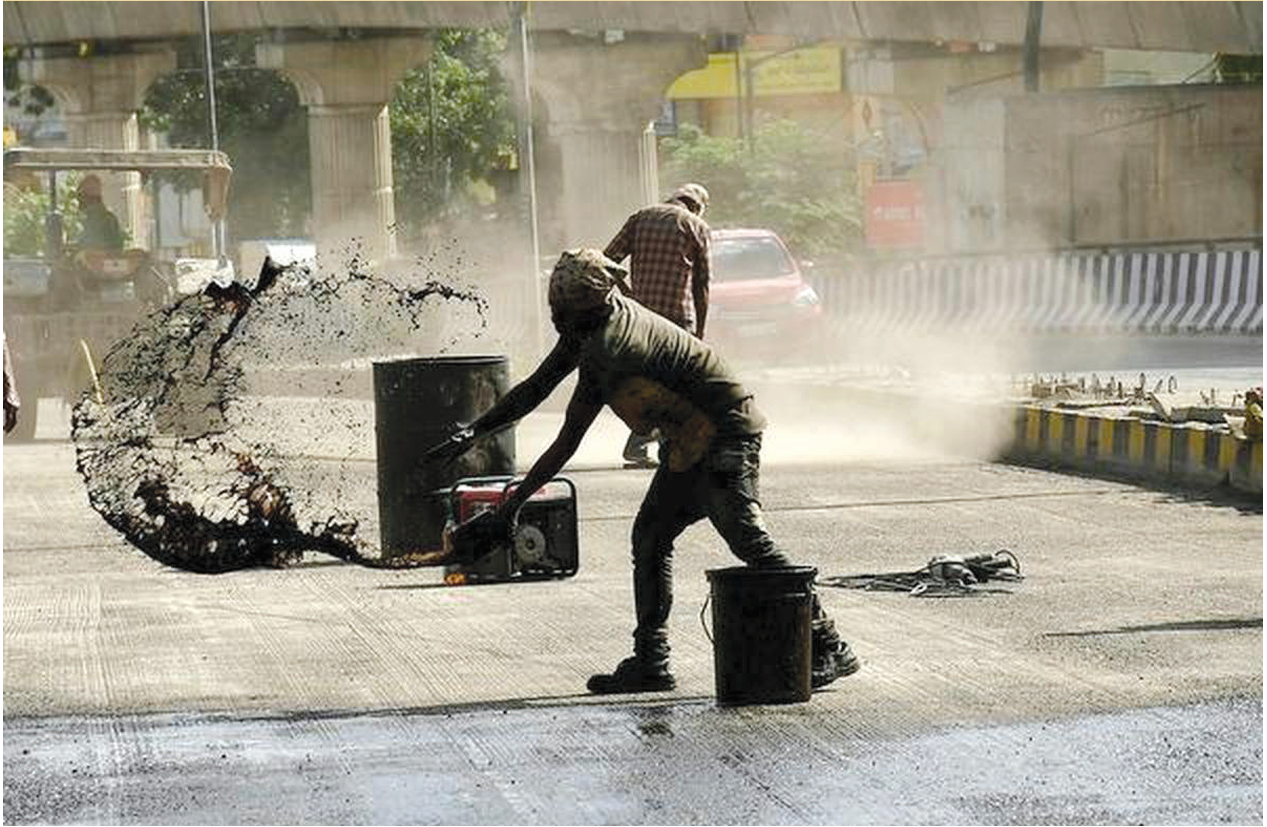
Rising bitumen prices, war tensions stall pothole repairs
Hubbali
With the monsoon fast approaching, the Hub balli-Dharwad Municipal Corporation (HDMC) is facing mounting pressure to repair deteriorating roads across the twin cities even as soaring bitumen prices, triggered by the ongoing conflict in Iran and the Gulf region, threaten to derail urgent pothole repair works.
Leader of the Opposition in the HDMC and former mayor Eeresh Anchatageri has urged the civic body to immediately undertake asphalt patchwork on pot hole-ridden roads before the onset of heavy rains. Anchatageri said several arterial and interior roads in Hubballi and Dharwad had developed dangerous pot holes and surface depres sions, severely affecting motorists and pedestrians.
He said repeated com plaints were being received from citizens regarding ac cidents and near-miss in cidents caused by the poor road conditions. Although the issue had been flagged during the summer itself, comprehen sive repair works were yet to begin, he said, warning that the situation could worsen significantly once the rains commence, likely after May 20.
“The existing potholes may widen further during the monsoon and pose a serious threat to public safety if immediate repairs are not undertaken,” he stated. However, the corporation’s efforts to begin emergency repairs have run into an unexpected obstacle. Contractors associated with the HDMC and Public Works Department (PWD) have reportedly expressed reluctance to take up pot hole patching works due to a steep increase in bitumen prices.
According to sources, several contractors have written to the corporation stating that it has become financially unviable to execute repair works under previously approved tender rates because of escalating raw material costs. Senior HDMC officials acknowledged the challenge and said the corporation was exploring alternative mechanisms to prevent road conditions from deteriorating further during the rainy season.
HDMC Commissioner Rudresh Ghali said the civic body was considering classifying critical pothole repairs as “emergency works” to facilitate quicker payments to contractors. “By ensuring immediate payment clearance for contractors handling emergency road repairs, we can reduce their financial burden of borrowing and interest payments.
This could make the work viable despite the increased bitumen costs,” he said. The commissioner said, they have already identified potholes in each zone, tenders have been finalised and work order has been issued and the pothole filling work would soon commence.
The road repair crisis has also revived questions over the fate of the corporation’s much-publicised Thermal Road Repair machine, purchased around 2016-17 at an estimated cost of Rs 30 40 lakh. Officials admitted that the high-tech machine, in tended to carry out mechanised pothole filling during monsoon conditions, has remained virtually defunct for several years.
According to officials, the machine proved highly inefficient in field con ditions, reportedly taking nearly four to five hours to repair a single square metre of damaged road. The equipment was eventually abandoned around 2021 after spare parts became unavailable. Civic officials now concede that conventional manual patchwork remains faster, cheaper and more practical for large-scale pothole repairs in the city.

.jpg)

.jpg)

