.jpg)


.jpg)

 English daily published in Bengaluru & Doha


Don't want Bengaluru to become another Delhi: KSPCB Chairman
Bengaluru
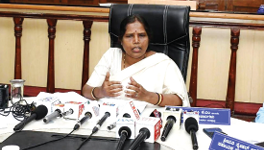
In an exclusive interview with News Trail, the Chairman of the Karnataka State Pollution Control Board, P M Narendraswamy spoke about the realities of environmental governance, the growing challenges before the Board, pollution in the Cauvery basin, the pressures of managing a city like Bengaluru with nearly 1.5 crore population, and the importance of public awareness in building a cleaner and healthier Karnataka. Excerpts.
The unresolved staff shortage at KSPCB has crippled its functioning. Your response
KSPCB is set to recruit around 300 staff members, addressing a 15-year backlog in recruitment. The government has approved the recruitments, with positions for clerical, technical, lab, and field staff. Advertisements will be issued soon, and the Karnataka Examination Authority will handle the process to ensure transparency. Currently, KSPCB is functioning with only 32% of its sanctioned staff, severely impacting inspections and enforcement and overall functioning of the board.
Do you think Karnataka is doing enough to protect the ecological health of the Cauvery basin?
Cauvery is not just a river – it is the lifeline of Karnataka. Crores of people depend on Cauvery water for drinking, agriculture, industries, and daily livelihood. Today, the river is getting polluted from multiple sources. The Sewage Treatment Plants are not functioning effectively in towns and cities, so where does all that untreated sewage go?
Whether it is from Mysuru, Mandya, Hassan, Chamarajanagar, or other municipalities along the basin, the drainage water, domestic sewage, industrial discharge, urban waste and other pollutants are also entering the river system in one form or another. Even when regulations exist, gaps in implementation, monitoring, and infrastructure create environmental stress. The concern is not about one isolated source of pollution, it is the cumulative impact of all these activities together.
What links does KSPCB see between pollution and rising respiratory illness?
We do not want Bengaluru to become another Delhi in terms of pollution levels. As of now, Bengaluru is comparatively in a safer position than many other major Indian cities. Today, Bengaluru is witnessing massive construction activity, rapid urbanization, increasing vehicle density, and large-scale infrastructure expansion. Naturally, dust pollution and vehicular emissions are increasing every day. Therefore, environmental planning cannot remain limited only to regulations on paper. Cities must also adopt practical and scientific urban solutions.
One important aspect that needs attention is the revival of fountains and water-based cooling systems at major circles, junctions, and public spaces across the city. Fountains are not merely decorative structures, but there is also an environmental and scientific purpose behind them.
Water droplets help in suppressing dust particles in the atmosphere.
Dust, suspended particles, and to some extent pollutants can settle down through moisture interaction, thereby reducing localized airborne dust levels. With Bengaluru’s rising construction dust and vehicular pollution, such urban ecological measures can contribute positively toward improving the micro-environment in crowded junctions. Recycled and treated water can very well be utilized for such purposes.
Do you believe Karnataka can become a national model for sustainable development?
Environmental protection is no longer only the responsibility of the government or the Pollution Control Board. Every citizen has a role to play. Public awareness, responsible waste disposal, water conservation, reduction of chemical pollution, and protection of lakes and green cover must become part of civic culture. Only through collective effort can we build a cleaner, healthier, and environmentally sustainable Karnataka for future generations. Pollution control cannot be handled by one department alone. It requires synchronized planning between all urban bodies – such as the GBA, BDA, BWSSB, and other civic agencies.
What are KSPCB's plans for the upcoming World Environment Day 2026?
We will honour five special awards to recognise individuals, organisations, NGOs and public contributors who are sincerely working toward pollution control, environmental protection, and public awareness. We proposed that these awards be instituted in the name of Saalumarada Thimmakka (renowned for her dedication to environmental conservation). The selection process for these recognitions will be carried out transparently by the Government and the concerned ministries. Awareness programs across all district headquarters throughout Karnataka will be initiated.

.jpg)
.jpg)