.jpg)


.jpg)

 English daily published in Bengaluru & Doha

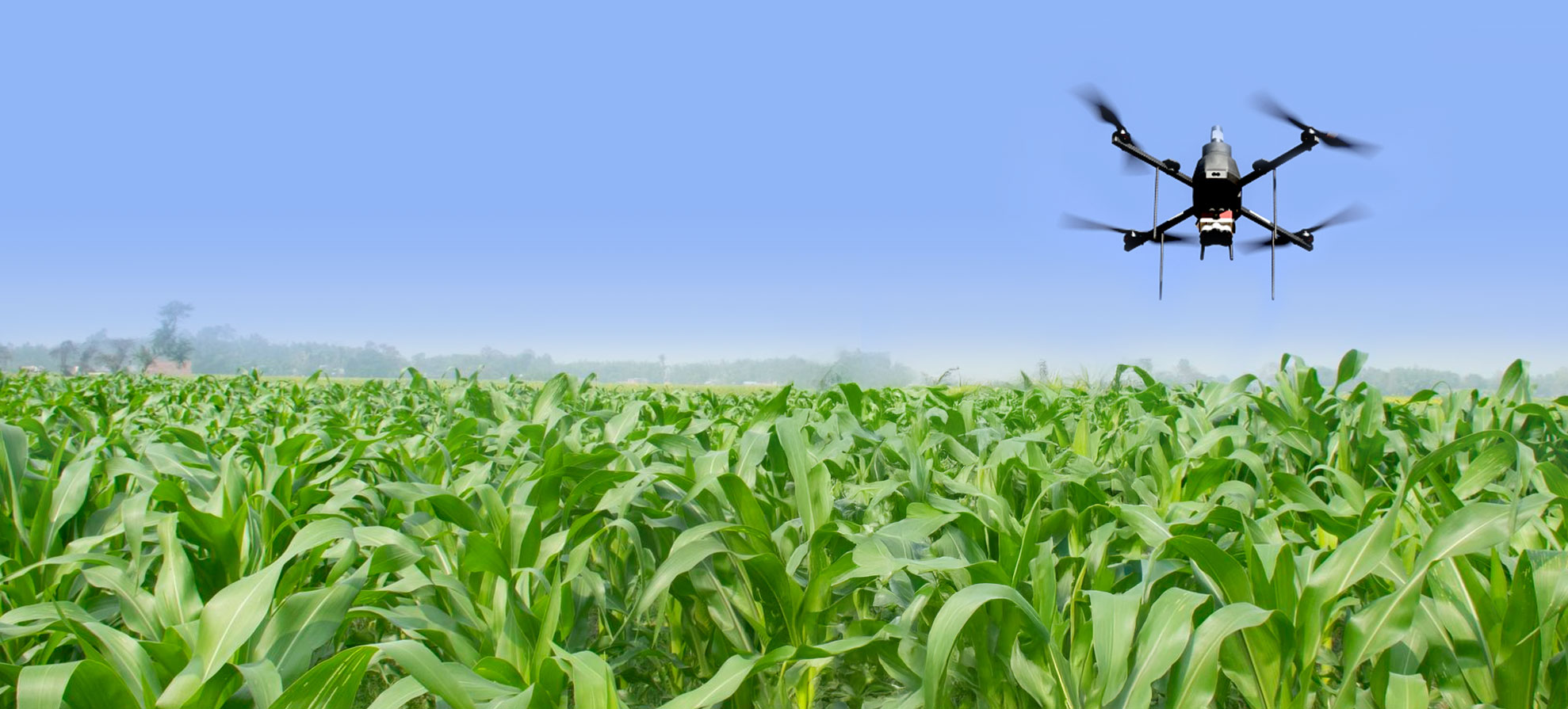
Agri-drones to transform farming sector
Hubballi,
The agricultural fields in North Karnataka is witnessing a high-tech transformation as unmanned aerial vehicles (UAVs), commonly known as drones, increasingly replace traditional manual sprayers in the fields. Driven by both central government initiatives and active research by local agricultural institutes, drone technology is not only making farming more efficient but also opening new livelihood avenues for rural women.
According to Dr. Vinayak H. Niranjan, Subject Matter Specialist (Agricultural Engineering) at the ICAR K.H. Patil Krishi Vigyan Kendra (KVK) in Hulkoti, the adoption of agricultural drones is steadily picking up, with inquiries and field demonstrations converting into tangible implementation. The demand for drone spraying peaks between late July and late August. "During heavy rains or when crop growth is high, traditional machinery or human-operated knap sack sprayers cannot enter the fields. This is when drones become indispensable," explained Dr. Vinayak.
Beyond convenience, the technology offers significant economic and logistical advantages. Traditional spraying requires about 400 to 500 liters of water per acre, whereas drones accomplish the same task using just 25 to 30 liters. It is also highly time-efficient; a drone can cover four to five acres in just an hour.
"If a farmer relies on manual labor for a 10-acre plot, it can take up to four days and cost around Rs 1,600 just for labor. Drones can slash these labor costs by half while ensuring the operation is completed swiftly, which is crucial for timely pest control to prevent yield loss," Dr. Vinayak added. Furthermore, it completely eliminates the dangerous physical exposure of farmers to toxic agricultural chemicals. Currently, drones are highly successful at spraying systemic pesticides and fungicides, which are absorbed by the plant.
Trials conducted by KVK Hulkoti on crops like safflower using chemicals like Thiamethoxam have yielded an impressive 99% pest control rate. Drones are also effectively being used to spray nano-formulated fertilizers like Nano Urea, Nano DAP, and water-soluble 19:19:19 NPK mixtures. However, the transition isn't without its challenges.
Research is actively underway to standardize the concentration of chemicals used in drone tanks. Experts are also studying "drift"—the risk of chemicals blowing into neighboring fields or water bodies— by optimizing the drone's operational height and speed. Furthermore, some farmers have expressed concerns over uneven distribution in inaccessible boundary areas (Region of Vision limitations). Empowering Women via 'Drone Didi' The Central Government's 'Drone Didi' scheme is playing a pivotal role in taking this technology to the grassroots.
Under this initiative, Women Self-Help Groups (SHGs) are identified at the district level. One member from the group receives free drone pilot training, and the group is provided with a drone. These women then rent out their spraying services to local farmers, creating a sustainable income model.
Alongside government schemes, private players like Syngenta and IF FCO are also entering the market, charging farmers anywhere between Rs 400 to Rs 600 per acre for spraying services (excluding chemical costs). Rahul Patil, founder of Sarus Aerospace which builds indigenous drones, said that as technology advances, drones are expected to do much more than spray chemicals. From advanced weed mapping to precise yield prediction using thermal and multi-spectral im aging, drones are poised to become the ultimate farming companion, ensuring agriculture takes a giant leap into the future.

.jpg)

.jpg)