.jpg)


.jpg)

 English daily published in Bengaluru & Doha

Difficult to identify illegal immigrants
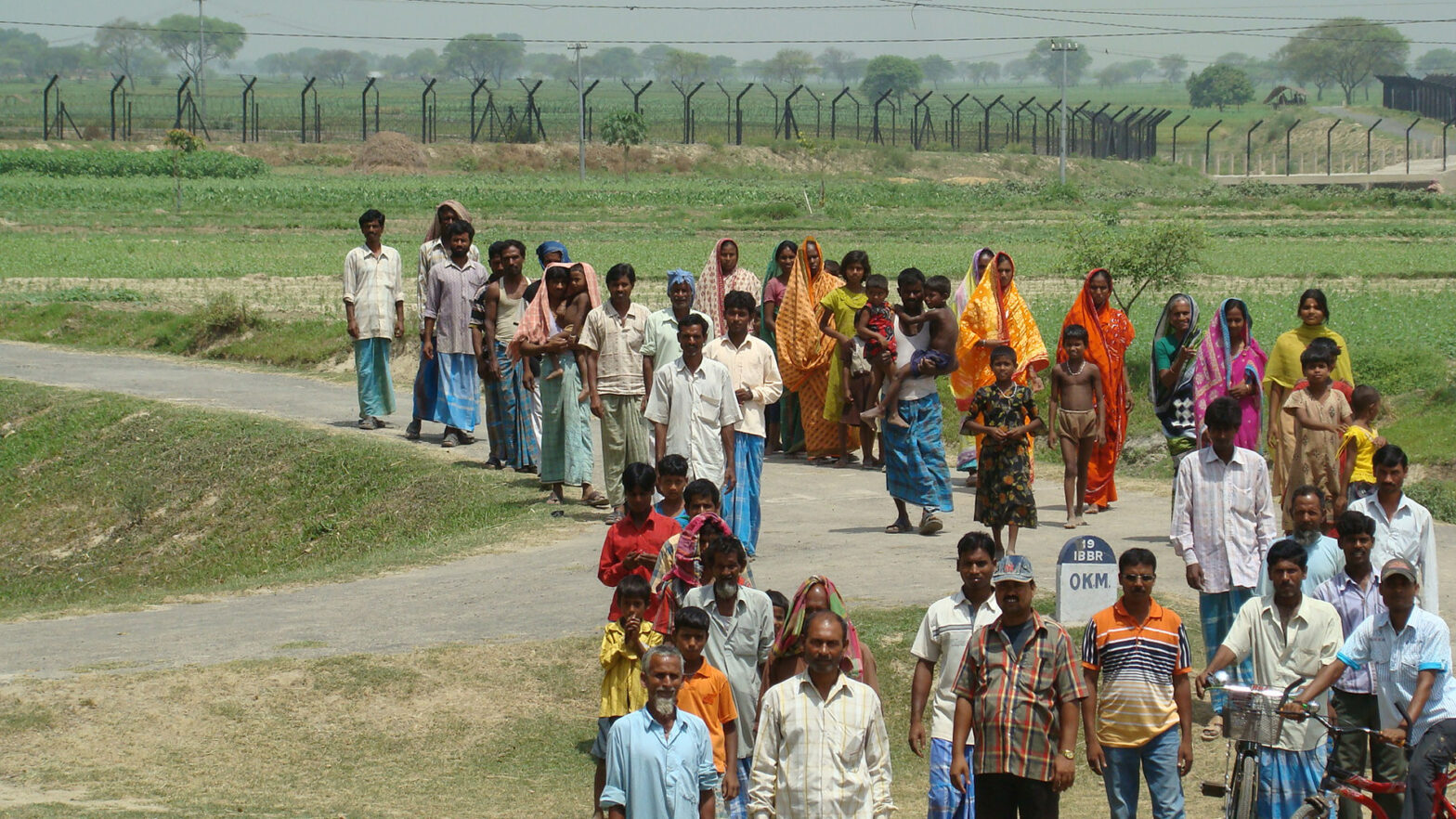
The ruling BJP and the affiliated right-wing organisations have made it a habit to blame the opposition political parties for harbouring illegal im migrants and using them as vote banks. However, the saffron parties’ calculated strategy to use the SIR exercise to remove such illegal immigrants from the electoral rolls of West Bengal and Assam, has generated a result which is not conclusive to prove that the illegal Rohingyas and Bangladeshis have been patronised by the opposition parties.
To begin with, the scale of BJP’s allegation which claimed thousands of immigrants, has not been substantiated in terms of material evidence. The Union Ministry of Home Affairs had issued a notice on the constitution of a High-Level Committee on Demographic Changes (HLCDC) under a retired Supreme Court judge, alleging extensive challenges have arisen from demographic changes due to illegal immigration.
On a departure from its rhetoric on border states like West Bengal, Assam, and Tripura, the MHA has now shifted its stance saying that the demographic changes due to illegal migration are not limited just to border areas, but their impact has extended, affecting urban centres, industrial corridors, tribal regions, and other socially and economically sensitive areas.
The notification said de mographic changes have been observed in certain regions of the country, which are not attributable to normal fertility or mortality trends but are instead emerging due to external abnormal factors such as illegal immigration, irregular population mobility, and administrative laxity. The BJP government admitted that the existing institutional framework has not been adequately equipped to un dertake coordinated, evidence-based, and time-bound evaluation and response to such demographic shifts.
The committee is tasked to submit its report within a year studying the possible causes of such demographic changes, such as variations in fertility, cross-border movement (including illegal immigration), economic opportunities, and other socio-environmental factors and underlying factors behind changes, including illegal immigration, abnormal settlement patterns, and planned migration.
It may be added here that the erst while free movement regime which allowed open travel to and from Myanmar, which borders Mizoram and Ma nipur, and after the military coup in Myanmar, has led to a significant number of refugees of Kuki-Chin- Zo ethnicities to migrate and settle in border states like Mizoram.
With the close ethnic, linguistic and religious kinship of these refugees with the people of Mizoram and some areas of Manipur, and with patronage of the state governments and the Church, it is extremely dif ficult to identify the exact numbers of such illegal immi grants, and even more tough to deport them because the borders still remain porous.

.jpg)
.jpg)
.jpg)
.jpg)
.jpg)