.jpg)


.jpg)

 English daily published in Bengaluru & Doha

Walking the Myanmar tightrope
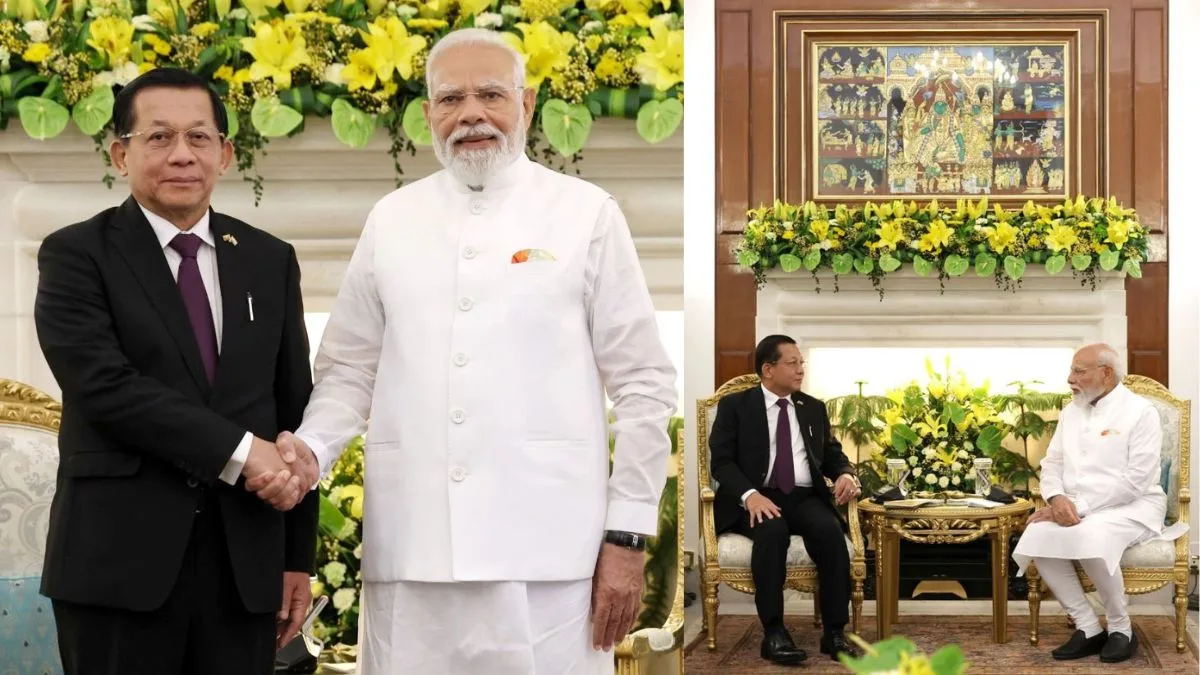
The five-day visit of Myanmar President Min Aung Hlaing to India, which began on May 30, represents a high-stakes diplomatic tightrope for New Delhi. He began his trip with prayers at the Mahabodhi Temple in Bodh Gaya, Bihar. About 85% of the people in Myanmar practise Buddhism, especially the Theravada branch.
There is a lot of controversy surrounding the trip, the first foreign tour by the junta chief-turned-president. Min Aung Hlaing, as the Commander-in-Chief of the armed forces, was the architect of the February 1, 2021 coup that ousted the democratically elected government of Aung San Suu Kyi.
There is a request for the president’s arrest for crimes against humanity pending before the International Criminal Court. Critics see India’s hosting of the president as legitimising the current regime, betraying core values, and risking the loss of influence with pro-democracy groups, which might at some point return to power.
They also argue that engaging with a leader wanted by the ICC will only alienate Western partners and international human rights bodies. On the contrary, India sees this visit as a “calibrated engagement”, in which hard strategic logic takes precedence over ethics and ideology. New Delhi says disengaging with Myanmar will not restore democracy there, but will only encourage militancy, which would be detrimental to India’s interests.
India is eyeing layers of benefits from Min Aung Hlaing’s visit. The first is geography. There is a 1,643-kilometre porous border, a transit point for insurgents, narcotics, and drone and arms networks. India seeks to secure Min Aung Hlaing’s help in dismantling the sanctuaries used by insurgents in Myanmar.
Secondly, the economy. The expansion of the rupeekyat settlement mechanism, operational since 2024, reduces dollar exposure for businesses in both nations, making bilateral trade more efficient. People may also benefit from increased cooperation in pharmaceuticals, agricultural machinery, and energy, including solar technology.
Then there are heavy rare-earth minerals like dysprosium and terbium, two-thirds of the global supply of which comes from Myanmar. They are used in the manufacture of electric vehicles and defence equipment. India has also invested over Rs 1,000 crore in projects like the Kaladan Multi-Modal corridor and the Trilateral Highway, which seek to end the isolation of landlocked Northeastern states, thereby boosting local trade, tourism, and people-to-people exchanges.
Thirdly, China. There is a 2,100 km border with China, and Myanmar is reportedly worried by Beijing’s “intrusive involvements” and “salami slicing” of border areas. In contrast, New Delhi is offering Naypyidaw a strategic alternative with a relationship that is less domineering. India has a tough balancing act to follow.
While hosting the president is a worthwhile gamble to secure national interests, India has to simultaneously impress upon the Myanmar government the need to take everyone along, and restore peace and normalcy to the strife-torn country. A failure to balance these two goals might leave India with neither strategic security nor regional respect in the years to come.

.jpg)
.jpg)
.jpg)
.jpg)
.jpg)