.jpg)


.jpg)

 English daily published in Bengaluru & Doha

Sullia-Kodagu rail plan revives green debate
Mangaluru
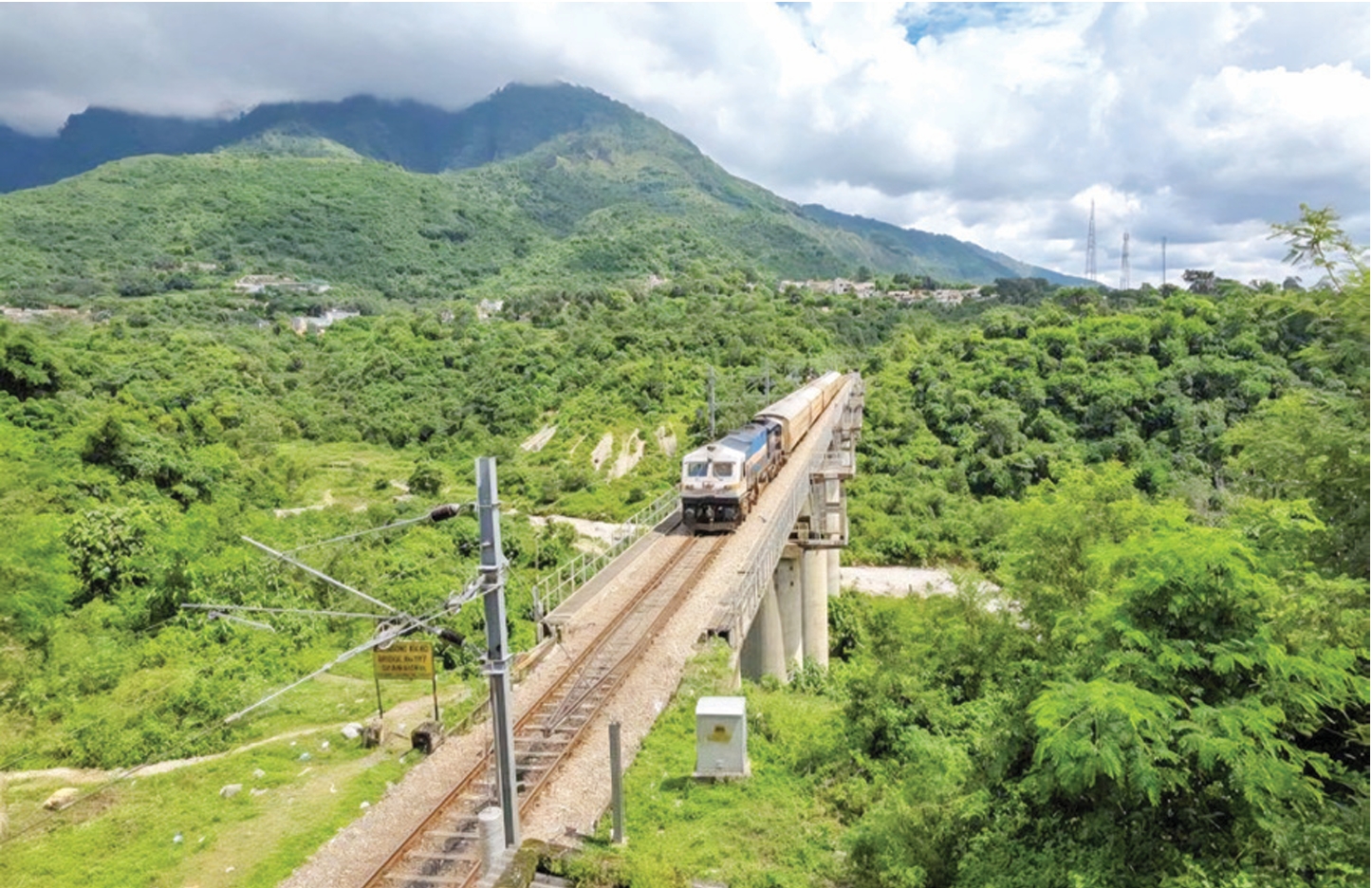
A fresh proposal to establish a railway connection between Sullia and Kodagu has reignited a long-standing debate on development versus envronmental conservation in the Western Ghats. The proposed railway corridor, stretching from Kaniyoor through Sullia, Napoklu and Madikeri to Kushalnagar, has once again entered public discourse after Sullia MLA Bhagirathi Murulya submitted a memorandum to Union Minister of State for Railways V. Somanna seeking the project’s inclusion in future railway expansion plans.
While the proposal has been welcomed by many who see it as a long-over due infrastructure boost for the region, it has simultaneously triggered strong opposition from environmentalists and sections of civil society in Kodagu, who fear irreversible ecological damage. The demand for a rail connection is not new.
For decades, residents and business communities in Sullia and parts of Kodagu have argued that better railway connectivity would improve transportation, boost tourism, facilitate trade and provide an alternative to the challenging road network through the Western Ghats. The issue gained renewed momentum after the election of MP Capt. Brijesh Chowta and MLA Bhagirathi Murulya.
During a recent visit by Rail way Minister V. Somanna to Mangaluru, the leaders jointly pressed for the railway link, reviving hopes among supporters of the project. However, the proposal has generated considerable concern in Kodagu. Environmental activists argue that large-scale rail way construction through the fragile Western Ghats could increase the risk of landslides, accelerate deforestation and threaten biodiversity in one of the country’s most sensitive ecological zones.
Social activist Pratheek Ponnanna has publicly voiced concerns through social media, warning that railway construction across the hilly terrain could have serious environmental consequences. Many residents believe obtaining environmental clearance for such a project would itself be a significant challenge.
The debate has also brought attention to earlier railway proposals in the region. During the tenure of former Railway Minister D. V. Sadananda Gowda and former Mysuru MP Pratap Simha, surveys were conducted for a railway line connecting Mysuru and Kushalnagar. Although the survey was completed, the project failed to progress.
According to Pratap Simha, railway norms require state governments to provide land free of cost and bear a portion of the project expenditure. The lack of progress on these fronts reportedly stalled the proposal despite preliminary studies being completed. Simha maintains that the Mysuru Kushalnagar railway proposal remains technically feasible if the state government extends the required support.
However, he has also acknowledged that extending the line further through the ghat sections towards Madikeri and Sullia would face considerable environmental and regulatory hurdles. Interestingly, the dream of railway connectivity in this region dates back even further. Earlier proposals envisioned linking Kanhangad in Kerala to Sullia through Panathur and connecting the route to the existing Mangaluru Bengaluru railway network via Kaniyoor.
Surveys for portions of that route were also undertaken over the years, including aerial surveys, but none advanced beyond the planning stage. Adding another dimension to the discussion is the changing stance of environmental economist Dr. Prabhakar Shishila. Once a supporter of railway connectivity between Puttur and Mysuru through Kodagu, he now opposes the concept following the devastating floods and land slides that struck Kodagu in 2017 and 2018.
According to Dr. Shishila, the region’s fragile ecology and unstable terrain make it unsuitable for major railway infrastructure projects. He argues that extensive excavation, tunnelling and land modification could permanently impact forests, water catchment areas and biodiversity. Instead, he advocates strengthening road infrastructure and public transport systems as a more practical and environmentally sustainable solution.

.jpg)

.jpg)