.jpg)


.jpg)

 English daily published in Bengaluru & Doha

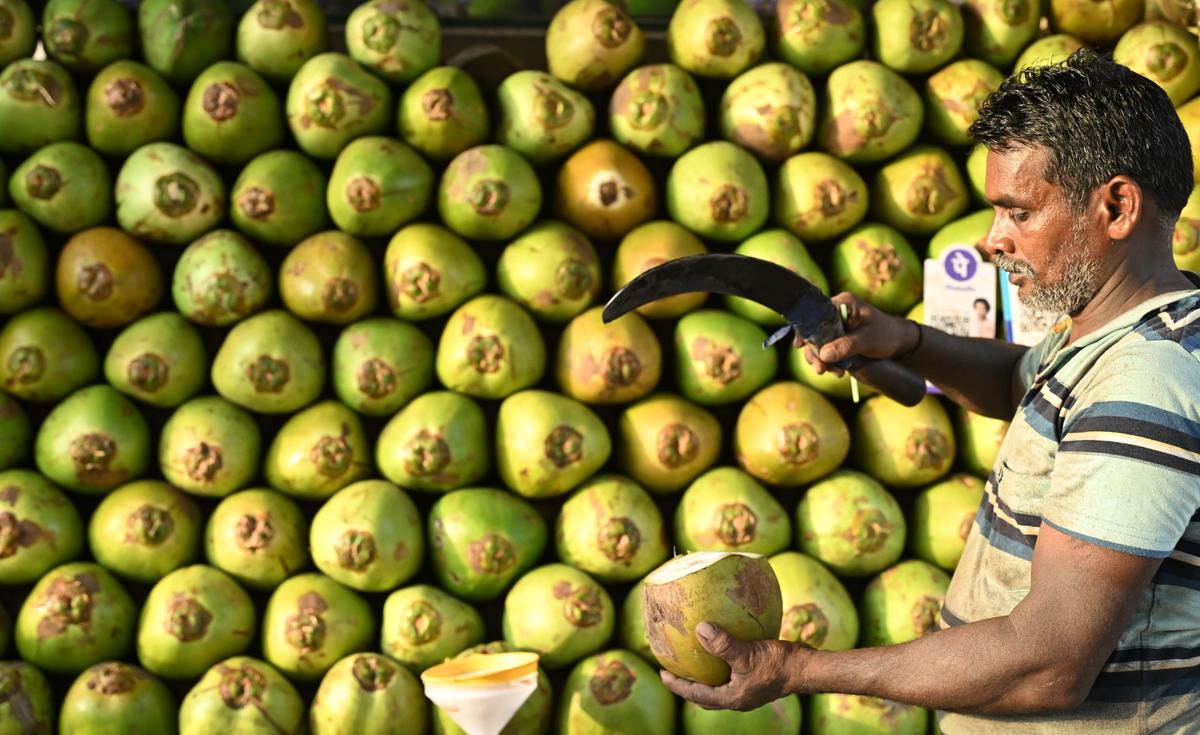
Coconut prices fall in Dakshina Kannada after record highs
Mangaluru
Coconut growers across Dakshina Kannada district are witnessing a sharp decline in prices after enjoying unprecedented rates over the past several months. Farmers in Puttur, Bantwal, Belthangady and Sullia taluks, where coconut cultivation forms a major source of livelihood, have expressed concern over the sudden correction, with market prices reportedly falling by nearly 40 to 50 per cent from the peak levels witnessed earlier this year.
The price surge over the last year had brought much-needed relief to coconut farmers who had been struggling with rising cultivation costs, labour shortages and fluctuating market conditions. Encouraged by the higher returns, many growers held back their produce expecting prices to remain strong. However, the market scenario has changed significantly with the arrival of the monsoon season. Agriculture and trade sources attribute the decline to a combination of factors. The onset of monsoon rains has slowed market movement and transportation activities across the region.
At the same time, the attractive prices witnessed in recent months encouraged farmers to bring larger quantities of coconuts to the market, resulting in increased arrivals and higher supply. Adding to the pressure, major traders and coconut processing units have reportedly slowed their procurement activities. Industry sources indicate that demand from certain export markets has also not matched expectations, leading to a temporary imbalance between supply and demand. As a result, prices have softened considerably across major coconut-producing centres in the district.
The decline has come as a setback for many farmers who were hoping to recover their increasing production costs. Over the last few years, expenses related to labour, fertilizers, irrigation, pest management and transportation have risen substantially. Many growers point out that while the recent high prices provided a cushion against these rising costs, the current correction has once again created uncertainty regarding profitability. In several parts of the district, farmers are reportedly storing coconuts instead of selling immediately, hoping for an improvement in prices.
However, with the monsoon intensifying, prolonged storage carries risks of spoilage, sprouting and quality deterioration, making the decision increasingly difficult. Despite the prevailing concerns, leaders of the coconut farming sector have urged growers not to panic. Kusumadhar, President of the Coconut Farmers Producer Company, Puttur, said the present decline is largely seasonal and should not be interpreted as a collapse in the coconut economy.
"The recent fall in prices is mainly due to increased market arrivals and the seasonal slowdown associated with the monsoon. When prices touched historic highs, naturally more produce entered the market. In addition, procurement by traders and processing units has slowed temporarily, while export demand has not picked up at the expected pace. These factors have contributed to the current correction," he explained. Kusumadhar emphasized that the long-term fundamentals of the coconut sector remain strong.
"There is absolutely no reason for farmers to lose confidence. Consumption of coconut and coconut-based products continues to increase across the country and globally. Products such as coconut oil, virgin coconut oil, coconut milk, coconut water, desiccated coconut and value-added coconut foods are witnessing growing demand. This demand will continue to support the sector in the long run," he said. He further noted that Karnataka's coconut industry faces several production-related challenges, including climate variability, water stress in certain regions and labour shortages, factors that limit unchecked growth in production.
"The present price decline should be viewed as a market adjustment rather than a long-term trend. Coconut remains one of the most important plantation crops in coastal Karnataka, and the demand outlook continues to be encouraging. Farmers should avoid distress sales and focus on maintaining quality and productivity," he added. Dakshina Kannada is among Karnataka's key coconut-producing districts, with thousands of farming families directly dependent on the crop. The sector also supports a large ecosystem of traders, transporters, processing units and workers engaged in coconut-based industries.
Market observers believe that while prices may remain under pressure during the peak monsoon months due to increased arrivals and slower trading activity, demand from domestic consumers, processing industries and export markets is likely to improve in the coming months. Any revival in export demand or reduction in market arrivals could help stabilize prices and provide relief to growers. Coconut farmers across Dakshina Kannada are closely watching market trends, hoping that the current downturn proves temporary and that prices regain strength as demand picks up later in the year.

.jpg)

.jpg)