.jpg)


.jpg)

 English daily published in Bengaluru & Doha


Voices grow louder to open dedicated HDBRTS corridor
Hubbali,
Nearly eight years after the first trial runs of the Hubballi Dharwad Bus Rapid Transit System (HD BRTS), a fresh debate has emerged over whether the dedicated BRTS corridor should be opened to private vehicles to ease mounting traffic congestion on the mixed traffic lanes of the route. The HDBRTS project has been the subject of debate since its conception. While supporters viewed it as a modern public transport solution for the twin cities, critics questioned its suitability for Hubballi and Dharwad.
Despite opposition from various quarters, the project moved forward, resulting in the widening of roads and the removal of hundreds of trees to create the dedicated bus corridor. Implemented under the Sustainable Urban Transport Project (SUTP) with funding support from the Government of Karnataka, the Ministry of Housing and Urban Affairs, the World Bank and the Global Environment Facility (GEF), the project was developed at a cost of Rs 970.87 crore. The 22.25-km corridor connecting Central Bus Terminals (CBTs) in Hubballi and Dharwad was formally inaugurated by then Vice President of India M. Venkaiah Naidu on February 2, 2020.
While BRTS buses operate in mixed traffic between Hubballi CBT and Hosur, and between Dharwad CBT and Jubilee Circle, the remaining stretch is reserved exclusively for the custom-built BRTS buses. Critics argue that the mixed-traffic sections have become major bottlenecks, leading to severe congestion and delays for commuters travelling between the two cities. According to sources, around 90 of the 100 buses in the HDBRTS fleet are currently operational, collectively making between 900 and 1,000 trips every day.
Those advocating the opening of the corridor contend that rule violations already occur frequently, with vehicles illegally entering the dedicated lane. They argue that formally permitting all vehicles to use the corridor would help ease congestion on the adjacent car riageways. Karnataka Chamber of Commerce and Industry (KCCI) President G.K. Adappagoudar said the time has come to reassess the effectiveness of the project.
He noted that traffic congestion and recurring accidents along the corridor have become major concerns and suggested that, at least until the completion of the flyover at Rani Chennamma Circle, the dedicated lane should be opened to other vehicles. Social activist Vikas Soppin echoed the demand. While expressing support for public transport, he said the present system is causing inconvenience to commuters. He suggested that until the flyover work is completed, all public transport buses— including BRTS, NWKRTC and Bendre buses— should be permitted to use the dedicated corridor.
Chairman of the Indian Concrete Institute, Suresh Kiresur, highlighted the practical challenges faced by commuters, traders and transport operators. “While the BRTS project has reduced travel time between Hubballi and Dharwad, it has also created several challenges, including traffic congestion, safety concerns, inadequate parking facilities and difficulties in accessing cross roads. Local businesses have reported reduced customer footfall, while auto-rickshaw drivers face operational hardships.
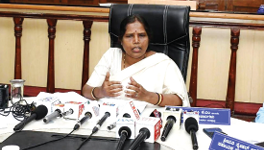
Authorities should review the ground realities and consider opening the corridor to all vehicles in the larger public interest,” he said. Noted physician Dr. M.C. Sindhur also supported the demand, describing the project as impractical for local conditions. “We have only one major road connecting Hubballi and Dharwad. The majority of road users are forced to endure congestion on the mixed-traffic lanes, while only a small section benefits from the dedicated corridor,” he said. However, HDBRTS Managing Director Savitri Kadi ruled out any possibility of opening the dedicated lane to private vehicles. Speaking to News Trail, she said the corridor would continue to remain exclusively reserved for BRTS buses and that no proposal to allow vehicles is under consideration.
.jpg)
.jpg)