.jpg)


.jpg)

 English daily published in Bengaluru & Doha

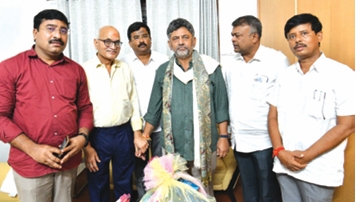
KEBEA, AIPEF meet CM; urge him against Tata's parallel licence
Bengaluru,
Opposing the move by private player Tata Power, which has applied for a parallel electricity distribution licence in 19 districts of Karnataka, the Karnataka Electricity Board Engineers Association (KEBEA), along with the apex national body, the All India Power Engineers Federation (AIPEF), submitted a memorandum to Chief Minister D.K. Shivakumar. AIPEF Chairman Er. Shailendra Dubey, KEBEA President Er. C. Basavanna, General Secretary Er. Chandra Shekhar Desai, KEB Employees Federation President Sri Balram, and other union leaders met the Chief Minister at his residence.
"We had a very fruitful meeting with Shri D.K. Shivakumar, Hon'ble Chief Minister of Karnataka. We apprised him of the potential adverse implications of granting a parallel distribution licence and the challenges it could pose to Karnataka's power sector," Dubey told News Trail. The Chief Minister listened patiently to all the concerns raised by the delegation. The discussion was held in a cordial and constructive atmosphere and was highly positive and encouraging.
"We are grateful for his time, understanding, and constructive approach to wards this important issue," KEBEA President Er. C. Basavanna told News Trail. It may be added here that Tata's proposed parallel licensing in Karnataka could end the monopoly of state-run ESCOMs, potentially offering consumers competitive pricing, superior power quality, and reliable supply.
However, experts from the power sector warn that private operators might target only high-revenue industrial areas, undermining the state's cross-subsidy model and increasing financial burdens on vulnerable domestic and rural users. The parallel licensing application, submitted to the Karnataka Electricity Regulatory Commission (KERC), is expected to impact the state's distribution and consumer landscape in multiple ways. As was observed in Mumbai and Delhi, competition is expected to drive down base electricity tariffs and offer tariff certainty, particularly for commercial and industrial users.
The parallel licensing has shown significantly lower distribution and transmission losses (T&D) in other operating regions. Just like in the telecom sector in India, parallel licensing lays the ground work for eventual consumer choice, where users could legally pick the distribution provider that best suits their reliability and pricing needs. To retain customers, state-owned entities like Bescom will be forced to modernize their workforce, reduce technical losses, and improve the quality of their service.
.jpg)




.jpg)