.jpg)


.jpg)

 English daily published in Bengaluru & Doha

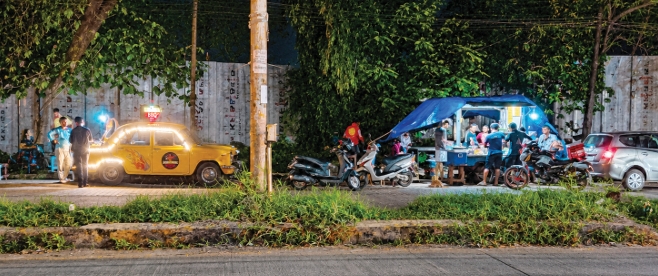
‘Tiger’ takes a catnap, food trucks back on the streets
Mangaluru,
Mangaluru witnessed one of the most talked-about civic enforcement drives in recent years. The campaign, christened "Operation Tiger," was spearheaded by then Mayor Sudheer Shetty Kannur, who took an uncompromising stand against unauthorized roadside food stalls, mobile eateries and food trucks operating on public spaces across the city. The move immediately grabbed public attention.
For some, it was a long overdue effort to reclaim footpaths, improve hygiene and restore order on city roads. For others, it appeared harsh on small entrepreneurs trying to earn a livelihood. The operation generated both criticism and appreciation, but one thing was certain - it sent a strong message that civic authorities were serious about regulating the mushrooming street-food culture. Nearly two years later, however, the Tiger appears to be resting.
A drive through several parts of Mangaluru today presents a familiar picture. Food trucks and mobile eateries have steadily returned to many busy junctions, roadside stretches and public spaces. In several locations, customers crowd around these outlets well into the night, creating vibrant food hubs that attract youngsters, families and office-goers alike. While the popularity of these food trucks is undeniable, so are the concerns that once prompted the crackdown.
Questions are again being raised about food safety, waste disposal, sanitation standards, parking congestion and the legality of operations. Residents in several localities point out that many food trucks con tinue to function on public roads and open spaces, often without visible information regarding licences, permissions or food safety certifications. The issue is not about street food itself. Mangaluru has always celebrated its diverse food culture. From traditional eateries to innovative food trucks, the city has embraced culinary entrepreneurship.
Food trucks have created employment opportunities, offered affordable dining options and introduced new food concepts to consumers. Yet, the challenge lies in balancing business interests with public health and civic discipline. During Operation Tiger, civic authorities had cited complaints regarding unhygienic food preparation, improper waste disposal, traffic obstruction and encroachment of public spaces. Several vendors were removed and many were warned to comply with regulations.
The message was clear: public roads and footpaths could not become permanent commercial spaces. However, as administrations changed, the momentum behind the campaign appears to have slowed considerably. Many residents now wonder whether Operation Tiger was intended as a sustained policy initiative or merely a temporary enforcement exercise. The return of food trucks to several locations has revived old concerns and sparked fresh debate on whether the city has a clear and consistent policy regarding mobile food businesses.
Adding to the concern is the city's ongoing battle with waste management. Mangaluru has intensified efforts to improve cleanliness, enforce waste segregation and penalize littering. Yet, food hubs that attract large crowds inevitably generate significant quantities of disposable plates, cups, tissues and food waste. Without strict monitoring and adequate waste management mechanisms, such areas can quickly become sanitation hotspots.
The situation also raises important questions about fairness. Restaurant owners, who invest heavily in infrastructure, licences, taxation and compliance requirements, often argue that regulations should apply equally to all businesses. On the other hand, food truck operators contend that they provide affordable food and employment opportunities and deserve des ignated spaces rather than repeated crackdowns. Perhaps the solution lies somewhere in between.
Instead of periodic enforcement drives followed by long periods of inactivity, civic experts suggest a structured framework for food trucks. Designated vending zones, mandatory hygiene inspections, proper waste disposal systems, parking regulations and regular monitoring could help create a balance between entrepreneurship and public convenience. Many cities across India have successfully introduced regulated food truck zones that allow businesses to thrive while ensuring compliance with health and civic norms.
Manga luru, with its growing food culture and entrepreneurial spirit, could benefit from a similar model. The debate is no longer about whether food trucks should exist. They are now an integral part of the city's urban landscape. The real question is whether they should operate within a transparent and accountable system that protects both livelihoods and public interest. When Operation Tiger was launched, it roared across the city, drawing attention to issues that had long been ignored.
The campaign may have faded from public view, but the concerns it highlighted remain very much alive. Today, as food trucks once again occupy prominent spaces across Mangaluru, citizens are asking whether the Tiger has simply taken a catnap-or whether it is time for an other roar. For a city aspiring to be cleaner, smarter and more organized, the answer may determine whether Mangaluru's thriving street-food culture becomes a model of regulation or a reminder of unfinished civic business.
.jpg)
.jpg)