.jpg)


.jpg)

 English daily published in Bengaluru & Doha

For Opposition’s defection woes, Goa may hold answer
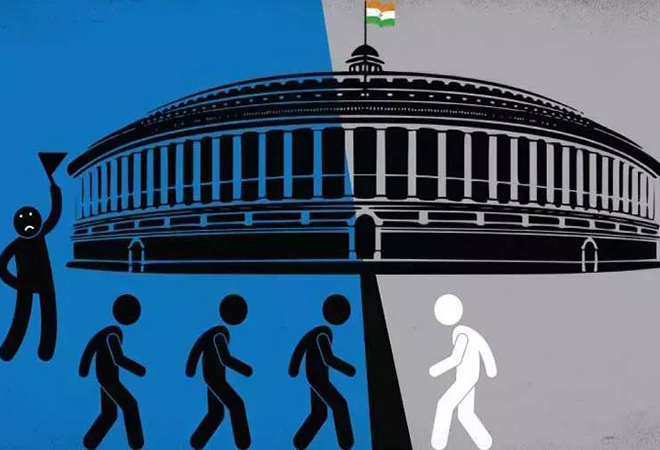
Defections by elected representatives are unfolding in almost all regions of India almost simultaneously. The control of the Trinamool Congress (TMC) slipping from Mamata Banerjee in Bengal, six of nine MPs of Uddhav Thackeray’s Shiv Sena (UBT) going to Eknath Shinde’s Sena in Maharashtra, and seven AAP MPs switching to the BJP in Delhi and Punjab , has affected multiple parties across India. While the legality of these defections is to be decided by constitutional courts, answers to the woes of regional political parties and their leaders may come from Goa.
A case to decide who avoids the anti-defection law, and who doesn’t, from the beach state of Goa, is pending in the country’s top court. All of these upheavals in Opposition parties, taking the defectors to PM Narendra Modi’s BJP-led NDA side, come with the same question of constitutional law; what are the exceptions to the anti-defection law in the Tenth Schedule of the Constitution. In April, seven of AAP’s ten Rajya Sabha MPs, led by Raghav Chadha, switched to the BJP.
Poll results in May gave the BJP its first government in West Bengal, and now 20 of the defeated TMC’s 28 Lok Sabha MPs have declared a merger with an obscure Nationalist Citizens Party of India (NCPI) as per consultations with the BJP. At the same time, six of Shiv Sena (UBT)’s nine Lok Sabha MPs have moved to defect to the Shinde-led Shiv Sena. India’s anti-defection law was introduced in 1985. It disqualifies any legislator who voluntarily gives up party membership or defies a party whip (direction).
It originally allowed two escapes; a split and a merger. The split exception was deleted in 2003 after being routinely abused. Only the merger route survives, under Paragraph 4 of the Tenth Schedule. Interestingly, this para has two parts. The legal battle rests largely over whether these two parts are to be read together or separately. If read together, the parent political party must first merge with another party, and two-thirds of the legislature party (meaning MLAs or MPs) merely has to confirm it.
If read separately, the two-thirds vote of MPs is itself enough to create a merger, with no decision by the parent party needed. Significantly, the SC judgment, authored by then CJI DY Chandrachud, spoke in unambiguous words of legislators alone as not being the whole political party. On April 17, the Modi government’s Constitution (131st Amendment) Bill was defeated as NDA didn’t have two thirds majority of 352. Understandably, for the saffron party every MP who now switches to the NDA narrows the two-third majority gap, and are all welcome on board, tainted or not.

.jpg)
.jpg)
.jpg)
.jpg)
.jpg)