.jpg)


.jpg)

 English daily published in Bengaluru & Doha

Delayed rains: Experts urge contingency planning
Hubbali,
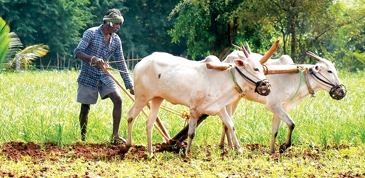
Farmers across the Hubballi-Dharwad region are facing mounting anxiety as anticipated monsoon showers have been reduced to mere scattered drizzles. With 90 percent of the Kharif sowing already completed, the agricultural community is now looking at a critical one-week window that could determine the fate of this season's yield.
Despite meteorological forecasts predicting a revival in rainfall starting this week, the region has only witnessed light, patchy showers. While Dharwad experienced slight precipitation yesterday and Hubballi saw minor showers today, the heavy, soaking rains necessary for robust crop development remain elusive.
Speaking to News Trail, Agriculture Joint Director (Dharwad) Manjunath Antarvalli warn that while the crops currently standing in the fields have not yet dried up, a continued dry spell over the next few days could severely impact their growth trajectory. "The early sown crops are currently holding on, but if this situation persists for another two to three days, or for the entire week, crop growth is likely to take a significant hit," he noted, emphasizing the delicate balance farmers are currently striking.
Despite the looming threat, authorities are advising against immediate panic or drastic measures. Uprooting existing crops to resow is being strongly discouraged at this stage. Officials have adopted a "wait and watch" approach for the coming week to see if weather conditions improve before recommending any alternative agricultural strategies.
If the dry spell stretches beyond the critical window and resowing becomes inevitable, experts are already formulating a contingency plan focused on drought resistant alternatives. For regions with minimal water availability, millets such as foxtail millet (Navane) and little millet (Korale) are being highly recommended due to their resilience in scarce rainfall conditions. If the soil retains some moisture, maize and cotton stand as viable secondary options. Interestingly, experts are advising against the late sowing of soybeans, as the crop becomes highly susceptible to pests and diseases when planted past its ideal window.
Green Drought? A deceptive "Green Drought" (Hasiru Barga) is sweeping across North Karnataka, leaving agricultural scientists and regional distributors deeply worried about a catastrophic crop failure Whilefields across Haveri and Dharwad currently present a lush, green facade to the casual observer, experts warn that a severe, hidden moisture crisis is unfolding beneath the surface.
With the monsoon heavily stalled and critical weather systems failing to materialize, over dependence on a single crop has pushed regional farmers to the brink of an unprecedented economic crisis. The current phenomenon is what agricultural experts classify as a classic "Green Drought." Minor, scattered showers and lower temperatures have sufficed to keep the foliage looking vibrant, but there is virtually zero moisture depth in the soil.
"The crop looks healthy from a distance, but it is a psychological deathtrap," warned Agricultural and meteorological expert Dr Ravi H. Patil who closely monitor the region. "It is completely stunted. Without sustained, heavy down pours, these plants will fail to develop or yield anything of value. The season is slipping through our fingers."
Haveri’s Maize Monopoly Backfires. The crisis is particularly acute in Haveri district, which has evolved into a virtual monopoly for maize cultivation. Roughly 25 years ago, Haveri was celebrated as a premier chilli-growing belt. However, relentless pest infestations forced a generational shift toward maize, which farmers came to view as a foolproof, resilient staple for the local soil, said Dr Patil.
Today, that total reliance on maize is aggravating the drought's impact. Local fields are filled with maize crops that are roughly one month old—entering a critical vegetative stage where their water demand peaks. Unlike pulses, which can tolerate brief moisture stress, the current maize crop requires immediate, substantial watering to survive, he said.
Data emerging from Dharwad district paints an even bleaker picture. Local agricultural clusters report staggering rainfall deficits. Rain deficits have spiked between 45% and 80% across various taluks in the Dharwad belt . Across areas like Hubballi, Kalghatgi, and Alnavar, daily precipitation has struggled to cross a meager 8 mm to 10 mm.
Experts point out that this is barely enough to keep the plant alive day-to-day (crop maintenance) but entirely inadequate for actual growth or groundwater replenishment. Alternative Crops ,Scientific Crop Management Practices for Drought Conditions With the likelihood of below-normal rainfall during the current southwest monsoon due to the El Niño phenomenon, the Krishi Vigyan Kendra (KVK), Hulkoti, has advised farmers to adopt alternative cropping systems and scientific crop management practices to minimise losses.
According to KVK agronomist Dr. Chetan Babu R.T., Gadag district which falls under the North Dry Zone, receives only 550–635 mm of annual rainfall and frequently experiences drought. Farmers are therefore urged to select drought-tolerant crops and suitable varieties based on rainfall availability. Sowing should begin only after receiving 50–60 mm of rainfall over two to three days.
Farmers should conserve soil moisture through intercultivation, thinning excess plants, mulching with crop residues, and timely weed control. During mid-season drought, foliar sprays of 2% urea, 2% DAP, 2% potassium nitrate, or 19:19:19 water soluble fertilizer can help crops recover. Protective irrigation using drip or sprinkler systems should be provided wherever possible.
If rains arrive in July, crops such as sunflower, sesame, pearl millet, foxtail millet, horse gram, green gram, pigeon pea, and fodder crops are recommended. Intercropping systems, including maize with pigeon pea and groundnut with pigeon pea or pearl millet, can improve resilience and soil fertility. Farmers are also encouraged to follow weather forecasts and scientific crop management practices to reduce drought-related crop losses and ensure bettear productivity

.jpg)

.jpg)