.jpg)


.jpg)

 English daily published in Bengaluru & Doha

Prison signal jammer leaves thousands disconnected
Dharwad
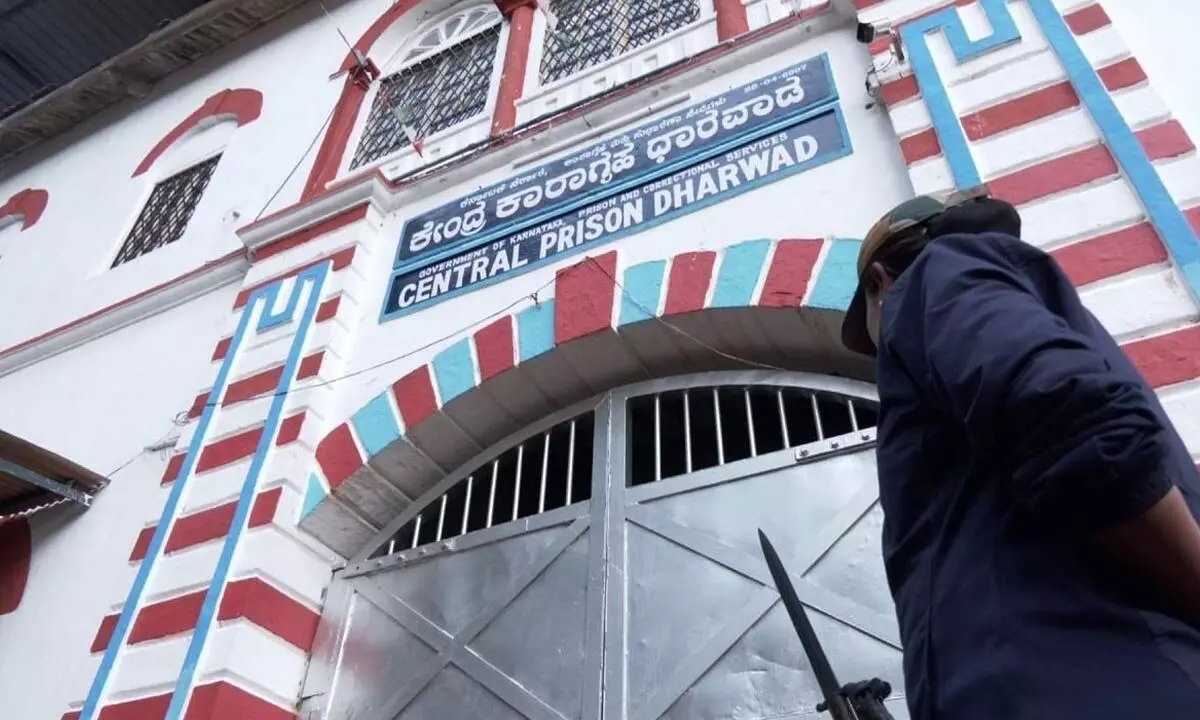
For thousands of residents living within nearly a three-kilometre radius of the Dharwad Central Prison, poor mobile and internet connectivity has become an unavoidable part of daily life. A simple UPI transaction often fails, online classes are disrupted, digital homework becomes difficult to complete, and even routine internet browsing turns into a frustrating experience.
In an era where almost every essential service—from banking and healthcare to education and government services—has moved online, residents of these neighbourhoods say they are effectively cut off from the digital world. Phone calls frequently fail to connect, mobile data remains unusable for long periods, and family members, employers, friends and business associates often struggle to reach them. In emergencies, residents say the inability to establish timely communication has become a serious concern.
Many say they discover dozens of missed calls only after travelling outside the affected zone, where mobile signals return. Ordering food online, shopping on e-commerce platforms, attending virtual meetings, making digital payments and accessing government services have all become daily challenges. Several shopkeepers and small businesses continue to rely heavily on cash transactions because UPI payments frequently fail.
Ironically, despite India's rapid digital transformation, residents say owning an advanced smartphone or laptop offers little benefit when there is barely any usable mobile network or internet connectivity. According to residents, the problem stems from the high-powered mobile signal jammer installed inside the Dharwad Central Prison to prevent inmates from communicating with the outside world.
While they acknowledge the importance of prison security, they allege that the jammer's coverage extends far beyond the prison walls, severely affecting surrounding residential neighbourhoods. The issue is said to affect thousands of people living in Mehaboob Nagar, Gulgunjikoppa, Koppadkeri, Quarters, Janata Plot, Kumareshwar Nagar, the areas around the New Bus Stand, DIMHANS, the Sub Urban Police Station, Malapur, Saidapur, Ettinagudda and several other nearby localities.
News Trail verifies residents' claims
News Trail visited several of the affected localities, interacted with residents and independently tested mobile connectivity at multiple locations. The newspaper found frequent call drops, poor mobile signal strength and inconsistent internet access. Mabusab, a resident of Ettinagudda, located nearly three kilometres from the Central Prison, said the connectivity problem has worsened over the past few months.
"Many of us have ported our mobile numbers to different service providers hoping for better coverage, but nothing has changed. The problem remains the same regardless of the network," he said. Altaf Mehandiwale, who runs a garage in Gulgunjikoppa, said the poor connectivity has affected both businesses and students.
"There is hardly any mobile signal here because of the jammer. A girls' hostel is located near my garage, and many students struggle to attend online classes or study because of poor internet connectivity. I recently switched from Jio to Airtel hoping the situation would improve, but it made no difference," he said. Mohammed Rafiq Nadaf, a resident of Mehaboob Nagar, said people from Mehaboob Nagar and the adjoining Gadi Kharkhana area have repeatedly appealed to the prison authorities.
"We have submitted memorandums several times to the Jail Superintendent requesting that the jammer's frequency be recalibrated, but nothing has changed. During the recent enumeration exercise, even government staff faced difficulties because they could not access the internet to upload digital forms. We were told that the Deputy Commissioner had also asked the authorities to recalibrate the jammer, but no action followed. Many residents have now installed wired broadband connections because mobile internet is practically unusable," he said.
Mahantesh Virakatmath, a medical representative residing in Saptagiri Nagar, said residents of Saptagiri Nagar, Vikas Nagar, Mayur Nagar and the Police Headquarters area have been facing severe connectivity issues for nearly two years. "5G networks frequently drop to 3G or disappear altogether. Calls often fail to connect or get misrouted, causing significant inconvenience. Despite repeated complaints, telecom operators, particularly Jio, have not been able to resolve the issue," he said.
Fairozkhan Pathan, another resident of Mehaboob Nagar, said the poor network has affected his children's education. "Teachers send study material online, and my children also attend online tuition classes. Because mobile internet does not work properly, we have installed a wired broadband connection. We are now forced to pay for both mobile recharges and broadband services," he said.
Residents seek a permanent solution
Frustrated by years of poor connectivity, some residents have begun demanding that the Central Prison be relocated from the area. Others are planning to stage protests against the prison authorities if the issue remains unresolved. However, most residents say that they are not demanding the removal of the prison's security infrastructure. Instead, they want the authorities to recalibrate or modernise the jammer so that it remains effective within the prison premises without disrupting the lives of thousands of law-abiding citizens living nearby.
"We understand the need for prison security. But the solution cannot come at the cost of depriving thousands of residents of basic mobile connectivity and internet access," said one resident. Residents believe that with modern technology, it should be possible to confine the jammer's coverage to the prison campus while ensuring uninterrupted communication services in neighbouring residential areas.
Jail authorities unavailable for comment
News Trail attempted to contact the Jail Superintendent for a response. However, his mobile phone was unreachable, and he did not respond to messages seeking his comments before publication.

.jpg)
.jpg)