.jpg)


.jpg)

 English daily published in Bengaluru & Doha

Minister’s bus ride puts focus on BMTC’s systemic gaps
Bengaluru
The Bengaluru Metropolitan Transport Corporation (BMTC) currently records a daily ridership of around 44 to 48 lakh passengers—a figure that has remained consistent, largely driven by the State government’s Shakti Scheme. However, with the rapidly expanding population of Bengaluru, commuters continue to face several operational challenges that affect the reliability, comfort, and efficiency of the city’s bus services. These issues came under renewed scrutiny after Karnataka Transport Minister Byrathi Suresh travelled incognito on 10 BMTC buses to assess the commuter experience firsthand.
During the surprise inspection, the Minister observed several concerns routinely encountered by passengers, including conductors displaying discourteous behaviour towards those without exact change and drivers failing to halt at designated bus stops. While the surprise inspection and the immediate actions taken by the Minister were welcomed by transport experts and commuters alike, many noted that these issues represent only a fraction of the systemic challenges requiring sustained attention to improve BMTC’s service delivery.
“To increase BMTC ridership, route planning must be data-driven, and bus frequencies need to be rationalised, particularly during peak hours. At present, some services operate with low occupancy while others remain heavily overcrowded,” said Vinod Jacob, an urban strategist. He further noted that strengthening real-time bus tracking through mobile applications would enable passengers to plan their journeys more efficiently. In addition, introducing electric mini-feeder buses to connect residential areas with Metro stations would significantly improve first- and last-mile connectivity, making public transport a more viable alternative to private vehicles.
Experts stress that BMTC must address the persistent gap between the number of buses in operation and the city’s growing travel demand. The inadequate fleet size, combined with irregular service frequency on several routes, has led to chronic overcrowding, adversely impacting commuter convenience and the overall quality of public transport. Vivekanand Kotikalapudi, Director of Transforming Bengaluru at Janaagraha, told News Trail that he frequently uses BMTC buses for his daily commute to work.
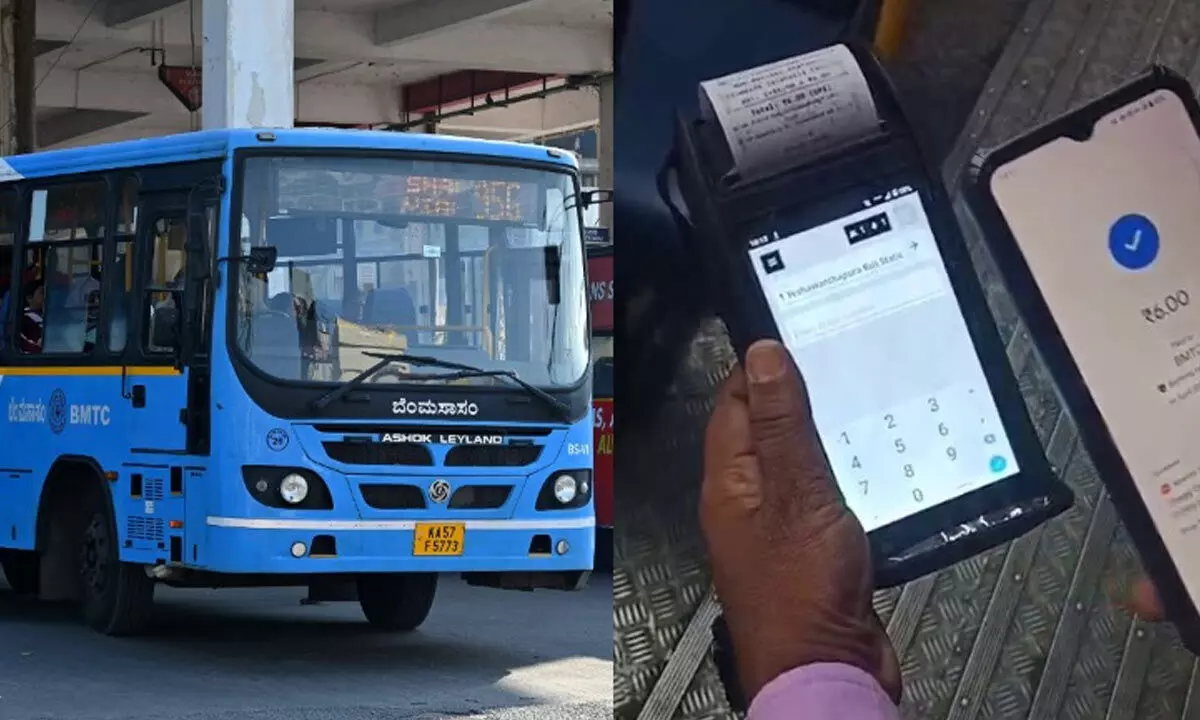
While he welcomed the introduction of UPI-based ticket payments as a positive step, he said several aspects of the BMTC system require urgent attention to provide commuters with a smoother and more comfortable travel experience. “I believe BMTC should conduct regular inspections of all bus stops and bus stations to ensure they are properly maintained. Many bus stops become waterlogged during the rains, while others have damaged seating and lack basic amenities.
Ensuring these facilities are safe and functional is BMTC’s responsibility towards its passengers,” he said. He added that bus stations should also maintain high standards of cleanliness, hygiene, and passenger safety, particularly in public toilets. Kotikalapudi also stressed the need to significantly improve the BMTC mobile application, describing it as slow, rigid, and lacking several essential features. “The user interface needs major improvement. At present, the app displays only a limited number of buses instead of the entire fleet.
It should provide comprehensive real-time tracking and bus schedules so that commuters, especially young people, are encouraged to travel more by public bus,” he said. He further suggested that route maps and bus schedules could be made more accessible through digital solutions, such as QR codes at bus stops, instead of relying primarily on LED display boards. Highlighting the need for better last-mile connectivity, he said BMTC should induct more mini and feeder buses into its fleet.
“What we need are smaller feeder buses that operate between Metro stations and surrounding neighbourhoods. Currently, standard-sized BMTC buses are deployed on many feeder routes, which is not the most efficient model. Dedicated mini buses would be particularly beneficial in IT corridors and rapidly growing suburbs such as Whitefield and Thanisandra,” he observed. He also called for greater transparency, urging BMTC to proactively publish operational data in the public domain. According to him, making such information accessible would enable transport experts, researchers, and citizens to analyse services and provide informed recommendations to improve Bengaluru’s public transport system.
The NCMC push
BMTC should prioritise improving the reliability of its services, particularly after 8 pm, as second-shift buses are often short-terminated before completing their routes”, said Rahul, a software engineer and public transport enthusiast. He said BMTC should allocate adequate time for every trip based on route length and traffic conditions to prevent service disruptions. “They should implement the National Common Mobility Card (NCMC) soon to reduce ticketing time and improve boarding efficiency”, he emphasised.
Rahul also urged BMTC to restore pre-COVID interconnecting routes to minimise the need for passengers to change buses, particularly at Kempegowda Bus Station (Majestic), and to work with the Bengaluru Traffic Police (BTP) and the Greater Bengaluru Authority (GBA) to introduce dedicated bus priority lanes and traffic signals wherever feasible.




.jpg)
