.jpg)


.jpg)

 English daily published in Bengaluru & Doha

Waste finds new value at state’s first fuel pellet plant
Mangaluru
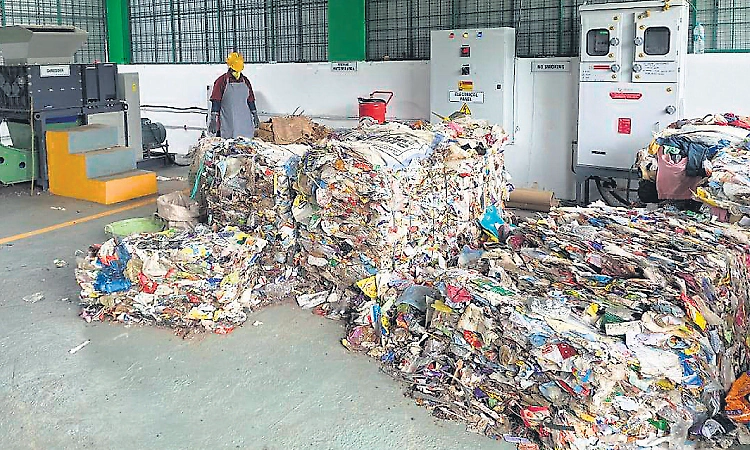
What was once considered a mounting burden for local bodies is now being transformed into a valuable resource. Dakshina Kannada has become home to Karnataka’s first Waste Fuel Pellet Plant, established at Kemral near Kinnigoli under the Swachh Bharat Mission (Grameen), marking a significant step towards scientific and sustainable dry waste management. Built at an estimated cost of ?48 lakh, the facility has a processing capacity of two tonnes of dry waste per day, or about 60 tonnes a month.
Instead of transporting dry waste over long distances for disposal, the plant converts non-recyclable combustible waste into fuel pellets, which serve as an alternative fuel for cement and other industries. The project follows a simple but effective model. Dry waste is collected and brought to the Material Recovery Facility, where it is scientifically segregated. Recyclable materials such as paper, plastics, metals and glass are separated and sold to authorised recyclers. The remaining combustible waste is processed into fuel pellets, ensuring that very little waste reaches landfills.
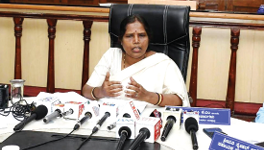
peaking to News Trail, Dakshina Kannada Zilla Panchayat Chief Executive Officer Narwade Vinayak Karbhari said the project has been designed as a sustainable, community-driven model that can be replicated across the district. The unit has been developed with funding from the Zilla Panchayat, while its operation will be entrusted to local entrepreneurs, Self-Help Groups or other eligible agencies. “Anyone can establish and operate such a unit under the prescribed guidelines.
The objective is to create a self-sustaining ecosystem where waste itself becomes a source of income,” Karbhari said. According to the CEO, the recovered fuel pellets are expected to fetch around ?5 per kilogram, generating operational revenue for the agencies managing the plants. During the initial phase, identifying buyers and marketing the pellets will be the responsibility of the unit operators. However, the Zilla Panchayat plans to establish a centralised intermediary mechanism in the future to aggregate production and connect operators with industrial buyers, ensuring stable market access.
Karbhari noted that fuel pellets are primarily used as an alternative fuel in cement manufacturing units. While Dakshina Kannada does not currently have a cement plant, there is growing demand from industries in other parts of Karnataka and neighbouring states, where regulations increasingly encourage the use of alternative fuels to reduce dependence on fossil fuels. Apart from addressing the district’s dry waste disposal challenge, the initiative is expected to create five direct local employment opportunities at each unit, besides generating indirect livelihoods through waste collection and segregation activities.
Women’s Self-Help Groups under the National Rural Livelihood Mission are also expected to play an active role in operating such facilities. The new model is also expected to significantly reduce transportation costs. Earlier, large quantities of non-recyclable dry waste had to be transported to distant processing centres, including Belagavi, adding substantial expenditure for local bodies. Processing waste within the district will reduce these costs while improving the efficiency of solid waste management.
Officials believe the Kemral plant could become a model for other districts as Karnataka moves towards a circular economy where waste is viewed not as a liability but as a resource. With increasing demand for alternative fuels and a stronger emphasis on sustainable waste management, the project demonstrates how scientific waste processing can generate revenue, create employment and contribute to a cleaner environment-all while turning heaps of discarded waste into a valuable commodity.

.jpg)
.jpg)