.jpg)


.jpg)

 English daily published in Bengaluru & Doha

Experts flag crumbling infra, teacher shortages, rising dropouts in Karnataka’s government Urdu schools
Bengaluru
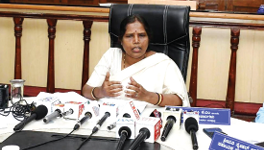
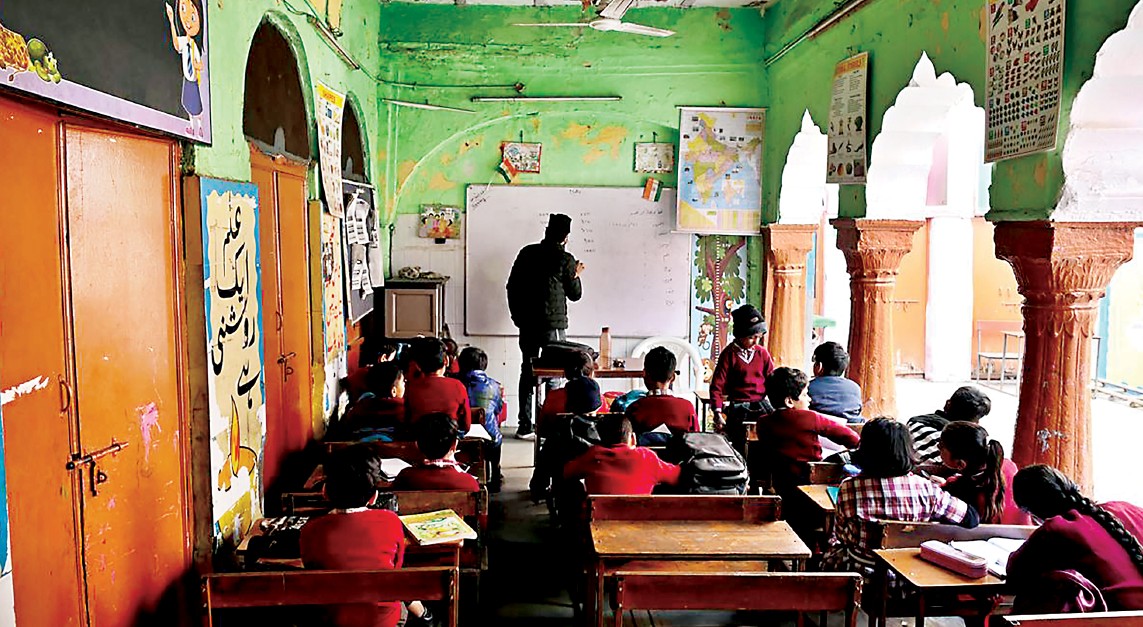
Speakers at a discussion on state of Government-run Urdu Schools in Karnataka on Saturday highlighted the pathetic condition of infrastructure, rampant vacancies, massive drop-out rate of students and absence of forward linkage for Urdu medium students. The discussion organized by the Hindustani Urdu Manch drew participants from former bureaucrats, media persons, academicians and social activists. Setting the premise for the discussion, former IAS officer Adoni Syed Saleem said eight retired Government officers carried out a study of the status of Urdu-medium education in 2024-25 which covered 70 such schools in eight districts and interacted with 100 School Development and Monitoring Committees (SDMC).
The survey alongside covered the socio-economic status of 547 Households (HHs) whose children were enrolled in these schools. He pointed out that the survey revealed that the families had annual incomes of Rs. 3.60 lakh or less, 70% lived in rented houses, 86% of the male heads of the households were employed as skilled or semi-skilled workers, 83% of female heads were only housewives, 90% of the HHs heads stated that since there were no higher education and employment opportunities for students who studied through Urdu medium, they preferred starting of English medium sections in these schools.
He also said 70% of these families were trapped in debt. According to Mr. Saleem, 65 Urdu schools reported 35 vacancies of teachers and headmasters; 72% of the schools had no paraphernalia for technology-aided teaching; those who attended the SDMC meetings, 90% were mothers and average attendance for monthly meeting was around 50%. Around 15% students attended classes while sitting on the floor. Several schools were being run in halls attached to mosques or Wakf buildings. It was also found that wherever former Urdu schools have been turned into bilingual schools (Urdu + English medium) in recent years, the enrolment has increased and attendance improved.
He said Karnataka had 4,526 Government Urdu medium schools against 56,522 Kannada medium schools and 13,121 English medium schools. There were 1,069 other government schools which taught through Marathi, Tamil, Telugu, Malayalam, Konkani and Hindi languages. Of the 4,526 Govt Urdu medium schools, 4,051 were primary schools (upto 7th std), 470 were secondary schools (mainly in north Karnataka districts which were earlier part of Bombay-Karnataka or Hyderabad-Karnataka regions) and only 5 were higher secondary which imparted education for 11th and 12th std.
He said, of the total students enrolled in schools in the state, Urdu medium schools accounted for only 2.92% of them while Kannada and English medium enrolled 49.75% and 46.39% respectively. Mr. Iftikhar Ahmed Sharief, former journalist, highlighted mistakes in Urdu translation of the Govt textbooks and regretted that Urdu schools were no longer attracting students from medium and elite sections of Muslim community in the state whose mother tongue was Urdu.
Mr. Azam Shahid, retired professor and an Urdu columnist said, the Muslim leadership had no organic ties with the community and was devoid of a vision of development. He said the Urdu teachers had no devotion towards the language or students and were smug with satisfaction once confirmed into their posts. “Most govt Urdu teachers were themselves enrolling their children into English medium schools”, he remarked caustically. Mr. Mujeebullah Zaffari, a former government officer, said Urdu speaking population lacked awareness about the govt schemes and stayed away from anganwadis (the state has 7 lakh of them).
He said the Govt Urdu medium schools had 18,000 teachers and there were 490 vacancies. He said 190,000 Muslim children were currently enrolled in private English-medium schools in the state. News Trail journalist, who referred to a research study he had done for the National Law School of India University in 2015-16 said, the economic linkages of the language were currently the prime consideration for parents enrolling their children in various medium schools. He said Urdu has largely been reduced to the cultural language of Muslim community which sees no economic benefit in attainment of higher education in this language, hence the preference for English-medium education.
He said Govt Urdu medium schools can overcome the disadvantage by bringing about amendment in the curriculum wherein Urdu medium students could be made to learn at least 5,000 English words and around 2,000 simple sentences of English between 5th and 7th std in order to ease the transition. He said official monitoring of Urdu was lax and several rural areas Urdu teachers drawing handsome salaries were sending proxies to teach the children.
Mrs. Farida Rehmatullah, Urdu writer, said poor learning outcomes in Urdu medium schools were the main cause of parents’ refusal to send their wards to these schools. Mirza Azmathullah, a retired official, said changes in educational preferences were linked to economy and technology and need to be adopted periodically. He said NCPUL conducts training workshops for Urdu teachers but no such workshop has ever been held in the state.
.jpg)
.jpg)