.jpg)


.jpg)

 English daily published in Bengaluru & Doha

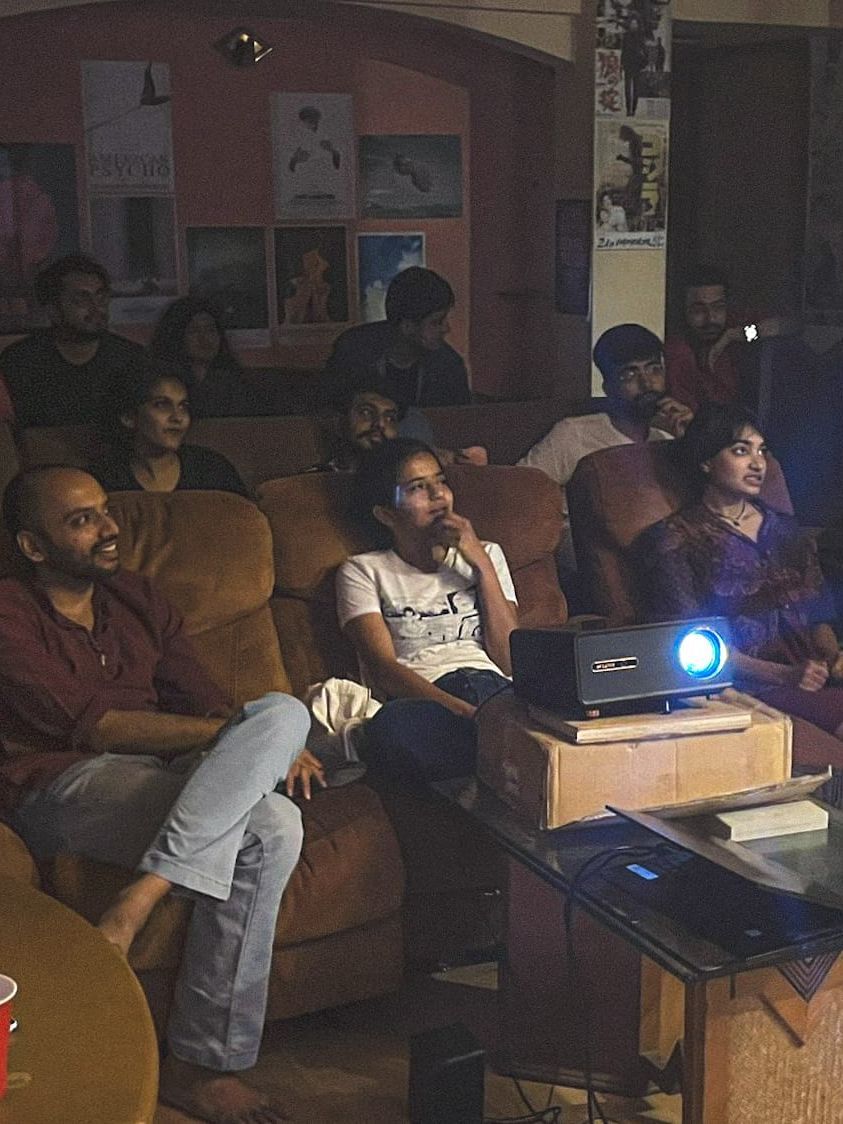
Burgeoning film clubs a boon for cinephiles
With films having become the most dominant form of media of our age, an enormous fandom has emerged as the medium has gained more and more respectability. India has a long history with the art form and has long appreciated and studied it, continuing to do so today. In this age of social media, multi plexes, and streaming, much of the traditional cinema experience has faded. However, the love of films remains strong, and one phenomenon that has gained popularity through the isolating times we live in is that of film clubs.
Multiple film clubs have sprouted in the city over the last few years— many of them during the pandemic and some more recently. “A friend and I had access to an auditorium, and we would pick films that we wanted to watch. It was mostly a set of friends sitting together and watching some thing. This was back in 2021, right before the second lockdown,” said Nikhil Waiker of the Parallel Film Club.
The Eastman Colours Film Club also started during the pandemic, but soon grew as like-minded people joined the screenings. “We started this during COVID. It wasn’t a planned thing—it was just three of us, and we thought we’d watch a movie in our separate places and then discuss it,” said Kartik, a founding member of the Eastman Colours Film Club, which completed its 500th screening last year with the Amitabh Bachchan and Shashi Kapoor starrer, Shaan.
With several clubs operating in the city, each seems to have its own niche. Eastman Colours, named after a film stock used in old Hindi films, focuses on old Bolly wood films, with no discrimination based on how popular the films are, while Parallel Film Club focuses on arthouse and experimental cinema from around the world. Another primary aspect of the clubs’ appeal is that they provide a forum for people to share their in terest with their own tribe, whether for academic, entertainment, or social purposes.
“One aspect is the curation—it gives people a pathway to explore particular film movements, directors, or themes in greater detail. The second element of the film club is the community. That aspect is dwindling, especially with the rise of individual film-viewing. For film clubs, either historically or now, that community aspect is a primary purpose,” Nikhil said. Clubs curate along the lines of themes, directors, and movements, among other things.
“Curations have been on topics like childhood, politics, queerness, and cities, among others. We see films as a medium to engage with and start conversations about the larger world,” said Anik of Cinema Next Door, a more recent addition to the city’s film club scene. While such clubs present an op portunity to monetise the phenomenon, keeping such monetisation out would be ideal. However, Anik says that some costs are unavoidable.
“Ideally, we’d want all our screenings to be free to attend. But we are working with the constraints we have. We have to pay for licensing films and the venue rent, which means the events need to be ticketed. The alternative would be to not do any screenings. Still, we have been very fortunate to find third spaces in the city like Underline Center and Atta Galatta to host our events. They are both venues that put more emphasis on building community than on monetisation, so we have been fortunate on that front so far,” he said.




.jpg)
