.jpg)


.jpg)

 English daily published in Bengaluru & Doha

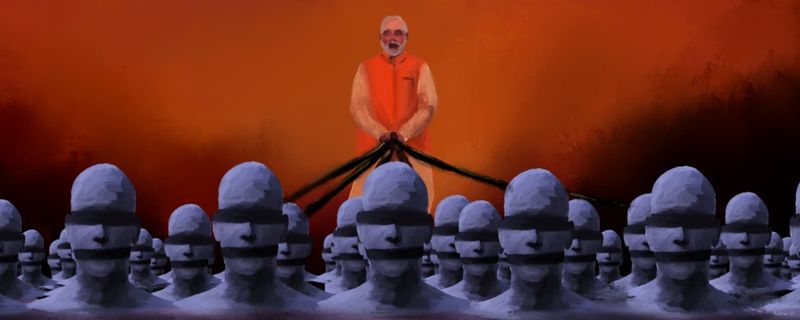
Elections give legitimacy, not credibility to govt
The contrast between the fasts undertaken by Anna Hazare and Ladakhi activist Sonam Wangchuk is perhaps unmistakable. Back in 2011, when the former launched his hunger striker against corruption—most of those charges were anyway proved fictitious later—the mainstream media, particularly the TV channels projected them as warriors of public cause. As crowds gathered, it became a spectacle. Leading anchors of prime time TV debates camped at the Ramlila Maidan portraying Arvind Kejriwal and Anna Hazare as ones voicing popular concerns.
Their call for appointment of public ombuds man as genuine demand. Visuals were compelling. Every speech was ‘breaking news’. Every slogan was a ‘public cry’. Manmohan Singh government panicked and tried to negotiate with Anna Hazare, an unelected leader, just an activist. When Baba Ramdev threatened to launch an agitation, the government sent then Finance Minister Pranab Mukherjee to the airport to receive him and appointed a five-member team to negotiate with him. Hindsight suggests the government’s response was weak-kneed. It lost the plot and surrendered the initiative.
It caved in too soon and ensured its own steady decline towards a defeat at the hustings in 2014. Contrast cannot be any sharper between two fasts separated by a hiatus of nearly 12-14 years. Of course, the media landscape has undergone a sea change with social media having fastened its grip over the popular narrative today. Students had the genuine grievance of being hurled into the pressure cooker of entrance exams due to paper-leaks. But the very same prime-time anchors felt no qualms in using derogatory words for them.
Portrayed the students as anti-socials (desh-drohi to be precise), members of the tukde-tukde gangs inspired by urban naxals from the JNU. The Modi government which used the 2012-14 protest as the ladder to power refused to even acknowledge the voices raised by the GenZ which sat at the Jantar Man tar for full four weeks. There was no attempt to politically engage with the students and their leader Sonam Wang chuk who had been imprisoned for over six months on totally specious charges. Ministers were warned not to utter a word about the agitators.
The Modi government wanted to deny them any legitimacy and political oxygen. Senior ministers were asked to stay away from the hunger strik ers. The mainstream media appeared not only complicit in the act but went a step ahead to defame them. Some even accused them to be funded by persons of the ilk of George Soros. They were dismissed as politically motivat ed. No wonder, the protest site had photos of the prime time TV debate warriors with boots hung around them. It is not difficult to guess why the mainstream media is so constrained and cautious while covering the protest against the Modi government.
It is either the corporate pressure, or ownership pattern that has over the last 15 years tilted in favour of business tycoons or simply fear. But the contrast is undeniable. It failed to question the es tablishment when farmers sat on a year-long dharna on Delhi borders; anti-CAA protestors hit the streets; women champion wrestlers staged an agitation against sexual harassment from political bosses heading the sports bodies; or students protesting demanding the accountability and resignation of Minister for education. What is obvious is that democracy is being reduced to winning elections every five years, making the people listen jan-jan ki baat. The lesson is clear: A govt that refuses to engage with the peaceful dissent risks creating the impression that it is willing to listen to its own ‘Mann ki Baat’. Elections give the govt legitimacy, but lestening gives them credibility.

.jpg)
.jpg)
.jpg)
.jpg)
.jpg)