.jpg)


.jpg)

 English daily published in Bengaluru & Doha

Monsoon session: Less debate, more acrimony
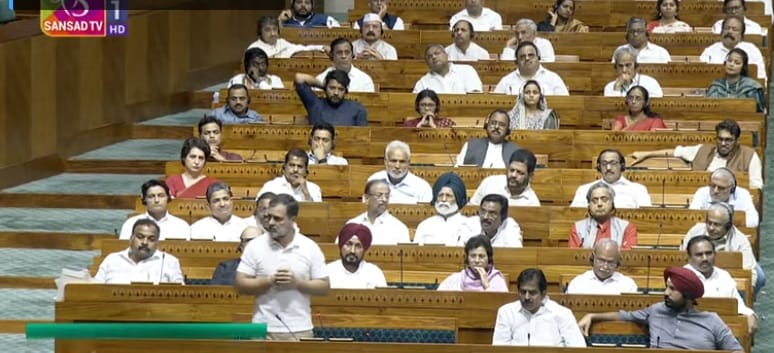
The 24-day Monsoon session of the Parliament that ended on Thursday, may go down into the parliamentary history as a washout. Recording abysmally low productivity at 19 per cent--Rajya Sabha logging somewhat better at 39 per cent--it passed 11 of the 12 bills with zero comprehensive discussion or debate. In Lok Sabha, discussions could happen for only 37 Hours out of total available 120 hours during this Session and in Rajya Sabha, discussions took place for 41 Hours 15 Mins.
Amid Relentless protests by the Opposition members led by Congress, question hours were either lost in cacophony or skipped. Pandemonium prevailed for most of the time and political dead lock characterised all the 19 sittings. What could be concluded is that rather than being a platform for collaborative policy-making, the process is getting detached from rig orous, yet healthy, debate. Reasons are not far to seek. The Opposition suddenly feels emboldened after the nation wide discontent over Students' protest in the wake of UG-NEET paper leak and theft of donations at the Ayodhya's Ram Temple.
Amid shouting matches and political slugfest the bills were hustled through the two houses. However, the Public Exams (Prevention of unfair means) Amendment Bill 2026 was the only bill that witnessed the full fledged debate. The Opposition scuttled the passage of the Foreign Contribution Regulation Act (FCRA) and the Delimitation Bill to raise the Lok Sabha's strength by 50% with induction of 33% women. While FCRA bill will go through the scrutiny of a Joint Parliamentary Committee (JPC), the Delimitation Bill has been passed over for the next session.
The Opposition stole the cheer from the treasury benches which was riding high till last month after an impressive victory in West Bengal. Boost to its legislative strength through defection and rather dubious and hitherto unheard measures such as mergers, had given it a shot in the arm. With addi tion of 37 MPs from parties like Trinamool Congress, Aam Aadmi Party, Shiv Sena (Uddhav Thackeray) and the Biju Janata Dal to its side in Lok Sabha and Rajya Sabha, the NDA government was expecting getting closer to two-third of the majority in the Lok Sabha.
It was also hoping to wean away Dravida Munnetra Kazhgam (DMK) from the opposition benches. But rise of the Cockroach Janta Party and the month-long protest at the Jantar Mantar dampened its mood. With mojo eroded, Prime Minister Narendra Gandhi and Home Minis ter Amit Shah stayed away from the House, and made a short appearance on the ultimate day of the session. Passage of bills such as raising of the sanctioned strength of Supreme Court from 33 to 37; name change of Kerala to Keralam; addition of six stanzas of Vande Matram national song; Mines and Min erals Amendment Bill etc may be considered as positive results of the session, though with minimal scrutiny. But Leader of Opposition in Rajya Sabha, Mallikarjuna Kharge’s citing of Shuddhikaran of the stage at Haridwar left a bitter taste in the mouth.

.jpg)
.jpg)
.jpg)
.jpg)
.jpg)