.jpg)


.jpg)

 English daily published in Bengaluru & Doha

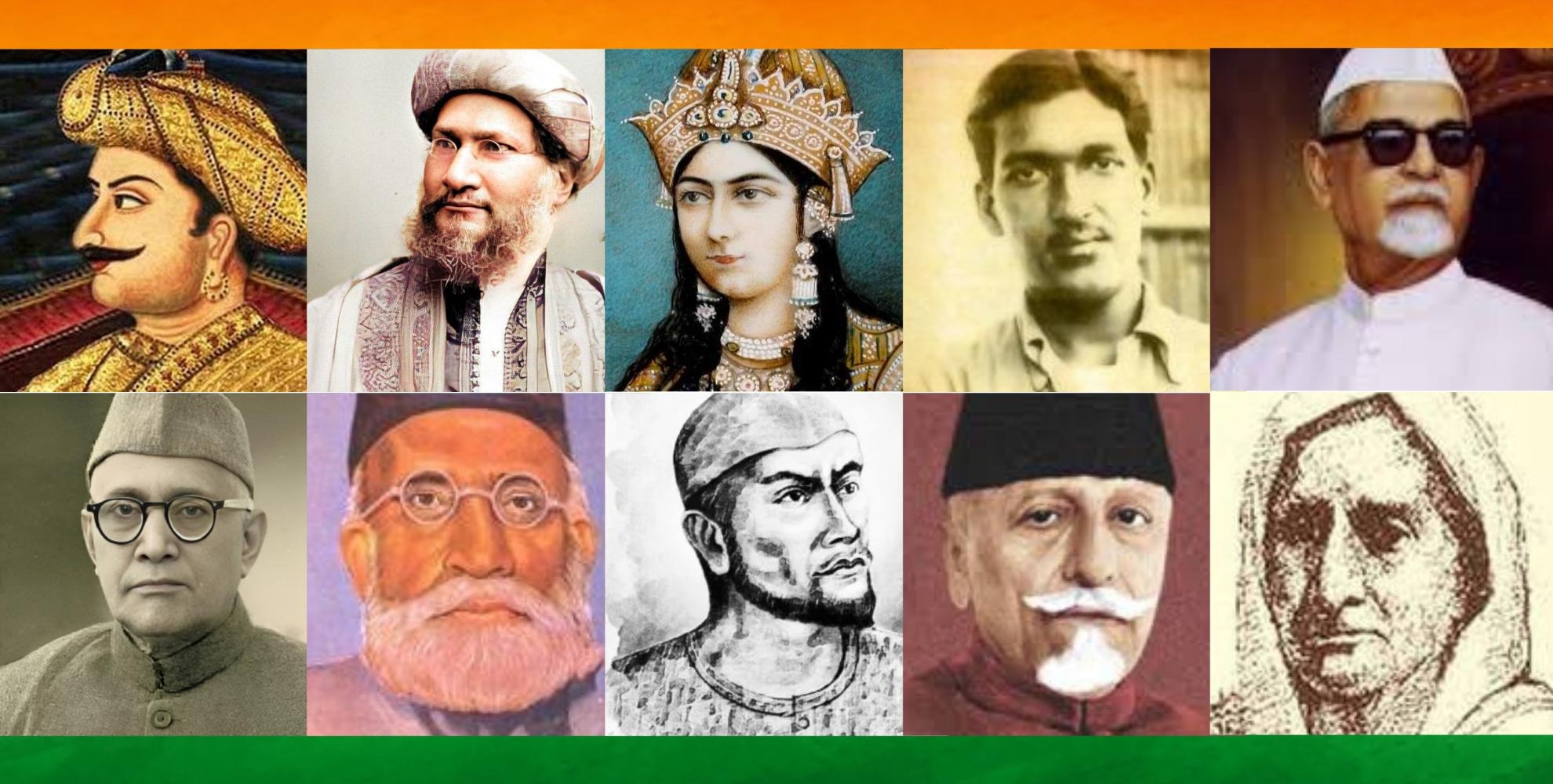
Tipu to Ashfaqullah Khan: Heroes who fought for freedom
Bengaluru
During India’s free dom struggle, the people of the coun try stood in unity against the British colonial rule that had exploited it and enriched itself. In contemporary times, there are sections of the country that would label people of minority communities as anti-national. Here are some freedom fighters from the Muslim community who fought for India’s independence.
Tipu Sultan: The Mysore King was one of the first to oppose the colonial rule of the British. Bengaluru University Histo ry Professor Masthan said of him, “I regard Tipu Sultan as a primary he r alder of the concept of fight freedom ing against the British in India. I don't think there can be anybody who can be compared to Tipu Sultan when it comes to the early resistance in the colonial empire. He not only developed the colonial resistance army, but also imbibed many foreign elements also, like the French fighting tech niques.” Tipu is also highly regarded by other histo rians such as Maharani University History head Shaheena Banu.
Hajee Osman Sait: Profesor Banu also spoke about her respect for the so-called ‘Cash bag of the freedom movement’ from St. Mark’s Road who donated bags of gold and money to the freedom movement after meet ing Mahatma Gandhi and Jawaharlal Nehru. "He spent around 7000 crore by sell ing his prop erty. He did that to help the other freedom fight ers, and he felt very happy doing that. He was very dedicated," professor Banu said.
Siraj ud-Daulah: The Nawab of Bengal was a superpower of the 1700s. His empire was rich, fertile and strong. He also t oo k strong steps againstBritish expansion in Bengal, however, the East India Company were able to defeat him in battle and seize his kingdom. Profes sor Masthan said of him, “Later the torch of this free dom fighting was started by Bengal, where Siraj-ud Daulah was against the British colonial author ity. So as far as the early phase was concerned, I believe they are the peo- ple who took up the fight.”
Begum of Awadh: Begum Hazrat Mahal of Awadh served as the Queen Mother under the kingship of her and the displaced former ruler of Awadh’s son. As Queen, she inspired the people of Awadh to follow her, spending her personal wealth on the army and leading them to victory to seize back the king dom of Awadh. S h e w a s one of the first fe male freedom fight ers, leading the state in the great revolt against the British in 1857, joining forces with Rani Laxmi Bai, Bakht Khan and Maulvi Abdullah. After the revolt, she was exiled to Nepal and even there, she refused to return to Awadh and work with the British who promised her a large pension.
Bahadur Shah Zafar: “It was under his guidance that the entire sepoy mutiny seems to have taken place. When the people gathered and then supported him, he was ready to accept the authority. But it was unfortunate that his end became tragic. He was taken away from the country and even today his tomb is there outside of the country,” professor Masthan said of the last king of the Mughals. His reign was marked by the dwin d l i ng of the once great power and a heroic stand against foreign rule.
Muslim Vellori: A lesser-known freedom fighter, he did a lot of so cial work in addition to the freedom movement and is more well-known in Beng aluru, hailing from the nearby re gion of Sriran gapat nam. H e is also known for his involvement in the Kh ilafath movement and his fiery speeches against the British.
Ashfaqullah Khan: He was a poet and fiery revolutionary who be lieved in taking direct a c t i o n against British rule. He worked with rev olutionar ies like Ram Prasad Bismil, Bhagat Singh and Chandrashekhar Azad, gaining notoriety for the Kakori Train Rob bery. The British wanted to make an example of the HRA and Khan was arrested and sentenced to death. Courageous to the end, he cheerfully asked his prison guards if everything was ready when they came to take him to the gallows. Be fore hanging, he tied a copy of the Quran to his chest and recited the Muslim declaration of faith.




.jpg)
