.jpg)


.jpg)

 English daily published in Bengaluru & Doha

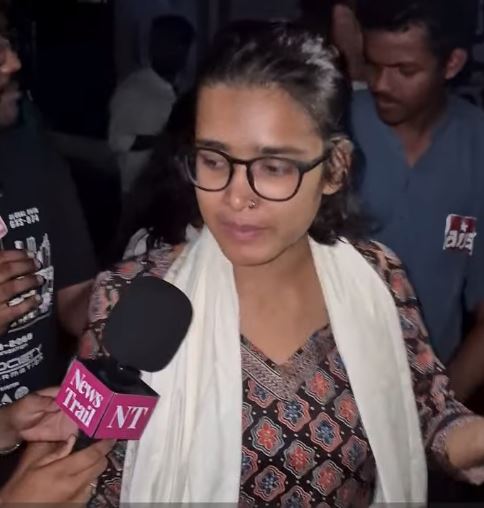
We need a thousand Jantar Mantars to uproot BJP-RSS system, says Neha Bora
Bengaluru
“We will fight with all the force of history and forge for ourselves a fu ture where there is no place for the RSS, where there is no place for the BJP. Not just today, not just tomorrow, not just in 2029, but never in this country. We will never repeat the mistakes that our ancestors made,” said All India Students Association (AISA) national president Neha Bora at the ‘Gen Z on the March’ programme in Bengaluru on Sunday. Addressing a packed hall of young students, activ ists, and citizens, she shared the stage with actor Kishore and Carnatic vocalist T. M. Krishna.
As part of the ‘Gen Z rising’ movement, Bora called on Karnataka’s youth and older generations to “educate, organise, and agitate” against pressing issues, including problems within educational institutions, rising fees, and the unemployment crisis. “Educate. Organise. Agitate. That has to be the order of the day,” she said, adding that there should be “a thousand Jantar Mantars” across India to uproot the BJP RSS system. Bora thanked Bengaluru citizens for showing solidarity with students allegedly lathicharged by the Delhi Police during the Sansad March on July 20.
“Lal Salam to all, specifically to the students who protested here when they saw that on July 20, students and young people were being dragged on the streets of Delhi. You saw the blood and did not think of it as the blood of someone else; you thought of it as the blood of a friend, of a comrade,” she said. Bora also supported students facing FIRs after protesting at Freedom Park. She criticised the Congress government in Karnataka for filing FIRs against students demanding the re lease of Umar Khalid and Shar jeel Imam, even as it expressed solidarity with protesters at Jantar Mantar.
“I believe that political parties claiming to be anti-BJP must lead by example instead of providing mere lip service to this anti-fascist agenda,” she stated. Bora backed activists on hunger strikes nationwide, noting that student participation in protests had grown significantly. She added that the rage displayed after the July 20 police action was not just about that incident, but reflected anger built up over years. Social inequalities Actor Kishore highlighted deep rooted social inequalities shap ing students’ experiences.
“If a Dalit child and a privileged upper-caste child walk into the same classroom, they may occupy the same bench, but they do not arrive there carrying the same social history,” he said. He expressed concern over attempts to restrict the student movement solely to the issue of examination paper leaks while avoiding references to specific individuals, incidents, and his torical contexts. While acknowledging that large movements naturally seek to become inclusive and appeal to a wider section of society, he cautioned against allowing the pursuit of majority support to result in the removal of issues or voices that might make some sections uncomfortable.
Kishore cited objections to mentioning the names of student activists Umar Khalid and Sharjeel Imam, as well as objections to the slogan “Azadi”. “Why should remembering the student or political voice that fought the same system, or remembering an incident, become a threat to the unity of the student movement?” he said. Politics inseparable T. M. Krishna echoed the senti ment, arguing that politics is inseparable from everyday life. “What you eat is political. Which shop you buy from is political,” he said. He said even routine choices are shaped by social and political realities. “The question of whether students should be political is stupid. The person asking students not to be political is essentially saying: be very duty-bound, be very aligned to this kind of religious fanaticism that is being spread,” he said.




.jpg)
