.jpg)


.jpg)

 English daily published in Bengaluru & Doha

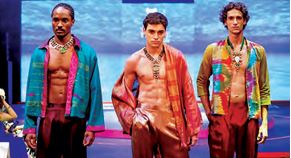
Slow fashion finds a foothold in fast-paced Bengaluru
Bengaluru
After technology and logistics changed fashion to respond to trends faster, the industry has struggled with huge amounts of waste and concerns over qual ity. Slow fashion emerged in response, serving as an alternative to the cycle of clothing being created, worn and then discarded. In Bengaluru too, brands like Sustainable Suz, EcoD haga and Ethic Attic have become part of the slow fashion movement by providing clothing that is sustainably produced, up cycled and made to last. “My grandmom started teaching me to sew when I was nine years old and I’m sixty now, so it’s not like it’s a new concept; it’s just the way we lived in those days,” said Susan Fernandes, founder of Sustainable Suz.
“I just want people to use what’s in their wardrobe for the next twenty years without buying something new. I only buy directly from very local weavers, and that way you know they are getting the money, and I make it with very pure cotton fabric that, I want to say lasts a lifetime, but lasts at least 20 or 30 years,” Susan said. The movement began in Western countries and, like many trends, it trickled down to India. However, in India, where the textile industry has its own in digenous practices and traditions which coinci dentally overlap with the principles of slow fashion, many people understand the concept without any one explaining it to them. “Stuff like Kantha stitching, it has been done since ages.
It’s because the awareness has increased and people are giving importance to it again. fashion,” said Kaulinya Das, a fashion professional. Sustainability has always been there; it’s just got a name right now. In India specifically, there is a big culture of recycling and reusing and doing jugaad, basically, and it has come across as sustainable She also mentioned that the slow fashion move ment was driven by the younger generation, but it’s been priced out of the movement because such arching challenges have made adoption slow. clothing items are more expensive than those made in the regular manner.
“If you ask a first-year student, they probably won’t go for a higher priced pure cotton shirt, so there are people who want to practise sustainability but aren’t there yet. For older people, they might not understand why it’s priced higher, but they like the hand-feel of it, so they might buy it,” said Kaulinya. For the pioneering Ethic Attic, while awareness has increased since they opened their store in Bengaluru ten years ago, over “I would still like customers to have a much deeper understanding of slow fashion. The reality is that fast fashion has only accelerated – what used to be four seasons a year has now become six seasons. In comparison, the shift towards slow fashion is still very minimal.
There are very few players, in fact negligible, compared to the big brands that are thriving in the Indian economy,” said founder Pradeep Krishnappa. He also mentioned that though Indians have a culture aligning with such a philosophy, things have changed over time. “Indians do inherently recognise the value in hand made ethnic wear, the skill that goes into hand weaving, block printing, embroidery and other work. We always had festive purchases, which was inherently slow fashion. Now, with globalisation and big brands bombarding us with their banners and sales, we are changing course and moving towards fast fashion and more frequent purchases of lower-quality clothes,” Krishnappa said.




.jpg)
