.jpg)


.jpg)

 English daily published in Bengaluru & Doha

Dharwad student's tech venture secures global backing to audit enterprise AI
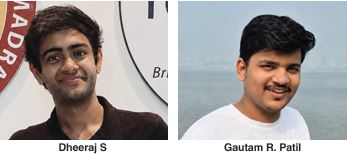
At just 20, Gautam R. Patil is working on a problem that could become increasingly important as artificial intelligence begins to take decisions and ac tions on its own. A second-year computer sci- ence student at BITS Pilani, Gautam has co-founded XAGI Labs with IIT Madras student Dheeraj S. The two young engineers are developing technology aimed at making autonomous AI systems safer, measurable and trustworthy. Their main initiative, TRUSCOR, can be understood as a kind of “CIBIL score for AI”. When a person applies for a loan, a bank checks the person’s credit history before deciding whether to lend. Similarly, when a company allows an AI agent to access its files, software, websites or other systems, it needs to know how much it can trust that AI.
AI agents are already capable of browsing websites, writing code, operating software and accessing company information. If such an agent makes a wrong decision, the result could be a security breach, financial loss, compliance problem or even an insurance claim. TRUSCOR is being built to provide independent evidence about these risks. It would test how easily an AI can be manipu- lated, what systems and infor mation it can access, what actions it can take and how serious the consequences of a failure could be. The idea is that enterprises, banks, insurers, auditors and other organisations could use this information before deciding whether to trust or deploy an AI system. A key part of TRUSCOR’s model is independence.
It will not assess MELRA or other XAGI Labs products, nor does it plan to fix the weaknesses it discovers and sell the solution. Its role is to test, record and measure. The founders believe this separation is essential if companies and institutions are to trust the assessment. TRUSCOR’s SOVA Engine tests AI agents, maps their access and records security findings as evidence. Gautam’s .sova and .sova trace formats preserve AI actions and testing conditions, much like a flight recorder. MELRA acts as an operating layer, controlling AI ac cess, permissions, approvals and actions within organisations.
Gautam, who is also a Government of India INSPIRE Award recipient, leads the TRUSCOR and SOVA research direction, while Dheeraj leads much of MELRA’s operating architecture. The wider team includes Bhavana Sanal, and Manak Patra. Within a few months, XAGI Labs says it has built two public open source repositories, developed a security-testing engine, published research and completed five reported pilot or validation engagements. It also reports strong results across its technical benchmarks, including 91.2% long horizon memory accuracy, 94.4% supporting-evidence coverage and 4.6-millisecond median cold local memory recall.
The company says it has also secured more than $1 million in cloud, AI and infrastructure benefits and gained access to several startup ecosystems. It reached the Top 10 at YNOS Gladiator and the Top 30 in the HYKR Studios Build Challenge. The immediate challenge is to turn the technology into a business. TRUSCOR is looking to work with AI companies, enterprises, banks, insurers and regulated in stitutions that need independent AI testing and risk evidence. Gautam Patil said, the it is currently operating as a rating agency, the company plans to eventually in sure AI systems directly. As AI becomes more powerful, the Gautam Patil believe that systems for controlling, testing and measuring it will become just as important as the AI itself.

.jpg)
.jpg)