.jpg)


.jpg)

 English daily published in Bengaluru & Doha

Beyond the gaze: Whose lives do we see?
Bengaluru
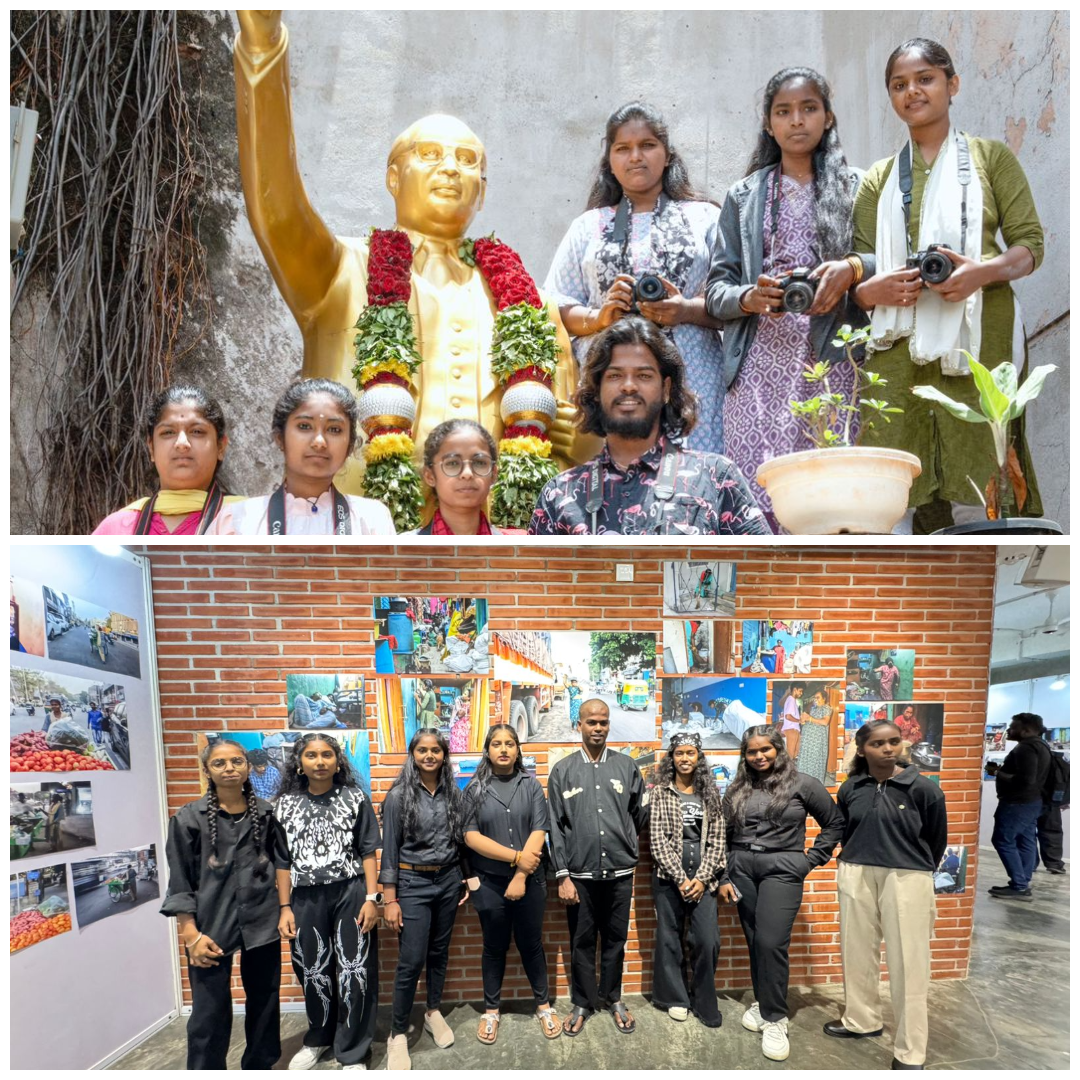
A mother sorting waste. A sister sifting through flowers. A teenager covered in paint while working. A plant growing from a make shift pot. At ‘Whose Lives Do We See?’ a two-day photography exhibition in Bengaluru, these everyday scenes look different – be- cause the people photographing them are the ones living them. The eight young photographers featured come from waste-picking communities across the city. None had formal training in digital media or story telling. Over six months, they learnt the basics of photography, went out and photographed people around them, shared their work, received feedback and returned to shoot again. The result is not a single portrait of a community, but many individual portraits of lives.
Eight cameras, countless stories
Sharmila S, 16, began by capturing her home on camera – her cramped seven-person house, the discomfort of monsoon flooding and poor sanitation. But her photographs also follow her elder sister, who works and then goes to college. There is labour in her images, but also family and possibility. Sharmila hopes to study commerce and continue documenting her community’s everyday life. Gokul Raj, 22, left school after Class 8 following his father’s death and years of financial strain; his mother has worked in the waste sector for more than 40 years. His photographs capture garbage dumps and rubble – and one plant growing from a discarded pot, which he sees as symbolic of his mother’s quiet effort to give her children a choice in life. The other photographers – Sujitha, Keer thana, Anushek, Anusha, Keshaveni and Kusuma – turned their cameras towards mothers, siblings, weddings, street work and neighbourhood life, even as they hold ambitions ranging from journalism and chartered accountancy to fashion design.
The larger picture
Photographs of marginalised communities can easily be reduced to images of hardship alone – the overflowing drain, the tired worker – turning people into symbols of suffering rather than portraying their full lives. Here, the camera is held by the people living those lives instead. Anupriya, Project Lead at Saamuhika Shakti for Hasiru Dala, says this shift matters: an outside photographer usually decides what is worth photographing and what it means, but “the people who are clicking the photos are actually from the community itself.” The larger goal, she says, is to give young people space to look at their own lives critically and tell their own stories. Palani Kumar, founder of Peoples Photographers Collective, taught the basics of light and framing, but says the real lesson was learning to spot stories in the ordinary – a mother working, a sibling studying, a neighbour returning home. As he puts it, journalism has long claimed to speak for the voiceless; “the voiceless should now have voices.” Both Peoples Photographers Collective and Hasiru Dala have come together to organise the exhibition. If one were to understand the gaps between accessibility and the “equity” boasted of by elite sections of society, one must definitely take a look at this exhibition. People who work day and night to keep this city clean do not even receive clean water, let alone clean and usable public toilets. Those who ensure that our homes look neat of ten have less than half a room’s worth of breath able space in their own homes. So, whose lives do we see? And if we are seeing them, do we care?
.jpg)




.jpg)