.jpg)


.jpg)

 English daily published in Bengaluru & Doha

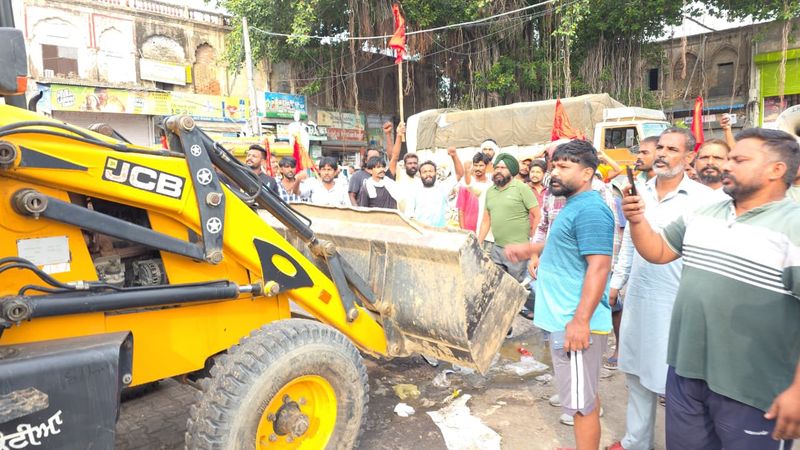
JCB to bouquet: Protest turns a youthful slip
There was a time when the message from the State – and the Supreme Court – was uncomplicated: protest, certainly; inconvenience the public indefinitely, certainly not; damage property, absolutely not. Democracy permitted dissent, but dissent did not come with a licence for disorder. Then something remarkable happened. The government softened. The Supreme Court softened. Almost overnight, FIRs that had been serious enough to warrant registration became an embarrassing family photograph everyone would rather put away.
The government's change of heart is perhaps the most delicious part. Governments are not famous for tenderness towards protesters. Their vocabulary is usu ally less sentimental – law and order, public property, disruption, accountability and stern action. Yet here was the government telling the Supreme Court that it had no objection to the cas es being brought to an end. Enter Article 142, that constitutional provision allowing the Supreme Court to do “complete justice”.
And complete justice, on this occasion, required an incomplete criminal process: no investigation, no trial, no years explaining why an FIR happened to be attached to one's name. The Court was concerned about students and their futures. A peaceful protest should not become a lifelong criminal impediment. But constitutional jurisprudence has an inconvenient habit of asking the next question. What about the non-student protester? The farmer? The worker? The pensioner? Does constitutional compassion become more generous when the protester has a student identity card?
To be fair, the Court has retained a hard line against serious violence and destruction of public property. This is not a declaration that protesters may do as they please. Nor is the order a binding precedent. It has been confined to the peculiar circumstances of the case. The judiciary has spent years reminding protesters that fundamental rights are not exemptions from the law. Public roads cannot be occupied indefinitely; public property cannot be destroyed in the name of agitation; protest does not place one beyond accountability.
Yet now, in an exceptional exercise of constitutional power, the criminal consequences of an episode have been swept aside. The government, meanwhile, has discovered mercy. Perhaps this is the new model of protest jurisprudence: the State registers the FIR, the government changes its mind, the Supreme Court invokes Article 142, and every one goes home happy. Compassion is no vice. But justice must not appear more forgiving depending upon who stands before it. Otherwise, we may end up with two kinds of justice: bulldozer justice for the allegedly troublesome and be nevolent justice for the suitably sympathetic.

.jpg)
.jpg)
.jpg)
.jpg)
.jpg)