.jpg)


.jpg)

 English daily published in Bengaluru & Doha

Tobacco cause for 70% of cancers among men, say Hubballi oncologists
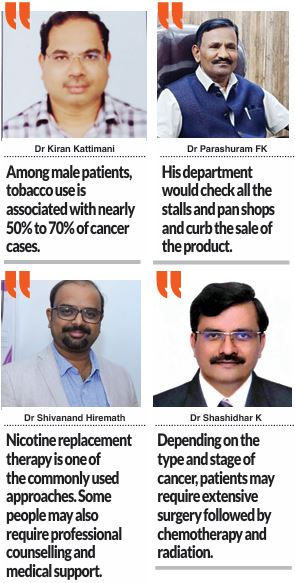
The Karnataka government's recent uncertainty over its proposed ban on tobacco-laced gutka and pan masala has raised concerns among medical professionals, who warn that continued access to smokeless tobacco products is contributing to a growing cancer burden, particularly among younger and working-age people. On August 10, 2026, the State government an nounced a one-year state wide prohibition on the man ufacture, storage and sale of gutka and pan masala con taining tobacco or nicotine. However, there is still confusion over the implementa tion of the ban. Health and Family Welfare Minister U.T. Khader has reit erated that the government has banned tobacco-laced gutka and pan masala. Despite this, tobacco-laced products continue to be available in the market, with gutka reportedly being sold in two separate sachets — one containing pan ma sala and the other contain ing scented tobacco. There are also concerns over the continued sale of tobacco packets and other forms of smokeless tobacco. Medical professionals have called for stricter en forcement of the ban, along with stronger measures to curb the widespread avail ability and consumption of tobacco products. Dr Kiran Kattimani, a medi cal oncologist practising at the Cancer Hospital in Na vanagar and Tattvadarsha Hospital in Hubballi, told News Trail that tobacco re mains one of the major con tributors to cancer cases in the region. “Among male patients, to bacco use is associated with nearly 50% to 70% of cancer cases,” he said. While smokeless tobacco is commonly associated with cancers of the mouth and throat, prolonged consumption can affect other parts of the body as well. Dr Kattimani said tobacco laced products such as gutka are associated with cancers affecting the stomach, oesophagus, gallbladder and pancreas.
Young population increasingly at risk
Doctors are particularly con cerned about the increasing exposure of younger people to tobacco products. The health consequences can be especially devastating when cancer affects indi viduals in their prime work ing years. When the primary earn ing member of a family develops advanced cancer, the impact often extends far beyond the patient. Loss of income, high treatment costs and prolonged care can place families under se vere financial and emotional stress. Dr Shashidhar K., Head of Surgical Oncology at the Karnataka Medical College and Research Institute (KMC-RI), also highlighted an increase in younger patients requiring cancer treatment and linked the trend to long term tobacco consumption. Depending on the type and stage of cancer, patients may require extensive surgery followed by chemo therapy and radiation. Such prolonged treatment can impose a significant physical, emotional and financial burden on patients and their families.
Early detection can save lives
For people with a long history of tobacco consumption, Dr Kattimani stressed the importance of regular medical evaluation and early screen ing. Identifying precancerous changes at an early stage can provide an opportunity for timely intervention before the condition progresses to invasive cancer, he said. Dr Kattimani maintained that completely avoiding tobacco remains the most effective way to reduce the risk of tobacco-related cancers. He called for stronger preventive measures, improved access to de addiction services, awareness programmes targeting young people and better screening facilities.
Quitting tobacco requires support
Dr Shivanand Hiremath, neuropsychiatrist and deaddiction specialist, said overcoming tobacco de pendence is not simply a matter of willpower and re quires appropriate support in many cases. Nicotine dependence can lead to withdrawal symp toms when a person attempts to quit, making it dif ficult for some users to give up the habit without professional assistance. Even people who make serious attempts to quit can face peer pressure and easy access to tobacco products, which can lead to relapse. “There are treatments available for people who want to quit tobacco. Nico tine replacement therapy is one of the commonly used approaches. Some people may also require profession al counselling and medical support,” Dr Hiremath said. Nicotine replacement products such as chewing gums, lozenges and patches are available and can help manage withdrawal symp toms as part of a structured cessation programme, he added.
Concern over surrogate advertising
Medical professionals have also raised concerns over surrogate advertising, par ticularly the promotion of plain pan masala and other proxy products by celebri ties. They argue that such ad vertising can normalise the consumption of products associated with tobacco use and make them more appealing to younger audi ences, potentially undermin ing public health and tobac co-control efforts. Speaking to News Trail, District Health and Family Welfare Officer Dr Para shuram FK, said, his department would check all the stalls and panshops and curb the sale of the product.

.jpg)

.jpg)