.jpg)


.jpg)

 English daily published in Bengaluru & Doha

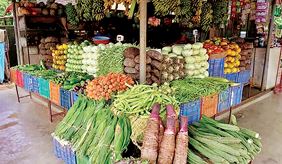
Festive price rise: Who is really controlling the market?
Festivals bring families together, but for consumers, they also bring a familiar worry: the sudden and steep rise in the prices of vegetables and flowers. Every year during Onam, Krishna Janmashtami, the Nativity feast and Ganesh Chaturthi, prices of essential locally grown vegetables shoot up. While increased demand is of ten cited as the primary reason, consumers question whether the entire in crease can be explained by the basic economics of supply and demand. Lady’s finger, which normally costs around ?120 to ?160 per kg, can rise to ?260 to ?300 during fes tivals. Local cucumber, normally priced at ?100 to ?120 per kg, can reach ?160 to ?200 or even more. For vegetable vendors, however, the situation is more complicated. Abdul Hameed, a vegetable vendor at Bondel, said growers often have the upper hand during the festive season.
«“Unless we buy the minimum quantity demanded by the growers and pay a higher price during one festival, they may not supply us during the next festival or even on normal days. This can affect our customer base. So, we have to oblige and pass the additional cost on to consumers.”» He said customers of ten complain about the high prices, but vendors are also caught between growers and consumers. “Consumers grumble, but we have to explain the practical situation,” he said. For consumers, how ever, another problem is the lack of uniformity in prices. Chandini Nayak, a homemaker, said prices vary considerably from one shop to another. “Every shop has a different price. Most of them are expensive, and it is difficult to understand why the same vegetable costs so much more at one shop than another,” she said. The problem is not re stricted to vegetables.
Flowers, which are in high demand during several festivals, also witness a similar price surge. Consumers say the price of flowers can rise sharply when demand peaks, leaving families paying considerably more for items that are traditionally considered essential for religious and cultural celebrations. The festive demand is certainly real. Households buy more vegetables, flowers and other items for special meals, poojas and celebrations. But the recurring pattern raises an important question - Is the entire price increase justified by demand, or are consumers being made to bear excessive margins at different stages of the supply chain? The answer requires greater transparency. Authorities could monitor wholesale and retail prices during major festivals, examine unusual price variations and ensure that consumers are clearly in formed about prevailing market prices.
Greater coordination between growers, wholesale markets, vendors and consumer authorities could also help reduce sudden price shocks. At present, the consumer is often left at the end of the chain, with little bargaining power and no clear explanation for the price being charged. Festivals should in crease demand, not provide an open invitation for un checked price escalation. The question remains - When prices shoot up ev ery festive season, who is actually keeping a check on the market?

.jpg)

.jpg)