.jpg)


.jpg)

 English daily published in Bengaluru & Doha

The elusive last mile
Though the city has different modes of public transport – BMTC buses, Namma Metro and suburban trains, they function in isolation and lack integration. Hence, most people find them unreliable and bank on private vehicles for their daily commute. Another major pain point is the lack of last-mile connectivity in most places, Nischith N. reports.
While Bengaluru has grown in leaps and bounds, especially in the last two decades after it became the Silicon Valley of India, the overall connectivity has miserably failed to keep pace with this growth. Though 110 adjoining villages were included in the city corporation nearly 14 years ago, the city’s public transport system continues to be patchy, forcing residents to rely on private vehicles.
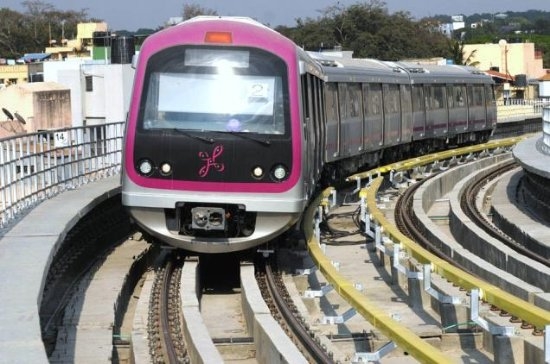
The city has multiple modes of public transport, including BMTC buses, Namma Metro and suburban trains, but they function in isolation and lack integration. Hence, many commuters find them unreliable and bank on private vehicles for their daily commute.
As the city has been a boomtown for the software industry and startups, the number of people with purchasing power to buy cars and two-wheelers is high. The result is severe traffic gridlocks at many junctions, due to the proliferation of private vehicles.
Entry of the pandemic has only added to this tendency of using private vehicles. People are now wary of using public transport for the fear of contracting the virus.
The commencement of Namma Metro services in 2011 had generated the hope that commuting from point A to B will be hassle free, and it would bring down the traffic volumes on roads, once BMRCL increased its footprint across the city.
However, commuters complain that even after a decade of becoming operational most stations lack last-mile connectivity and BMTC’s feeder buses have poor frequency. In fact, the transport utility has cut down on feeder buses after the pandemic began. Many areas in West Bengaluru include Kengeri, Jnanabharati, Sir M V Layout and few areas off Magadi Road are not well connected by BMTC or any other public transport. As the BMTC has failed to ensure proper connectivity on these routes, commuters are forced to spend hours waiting for a bus.
The Railways planned to upgrade the Byappanahalli railway station to integrate with the metro and BMTC. The aim is to reduce congestion at Yeshwantpur and Krantiveera Sangolli Rayanna Railway Stations. Though work on the new terminus is almost complete, it has not been thrown open to the public.
But in recent days the Railways, Bangalore Metro Rail Corporation Ltd (BMRCL) and BMTC have been working in tandem to ensure last-mile connectivity to commuters.
“The integration between BMRCL, BMTC and Railways for last-mile connectivity is a big task considering the Departmental approach and approval process. Phase 1 of Metro has many lessons to be learnt by all three agencies and the NHAI. This is the need of the hour for commuters considering the huge capital expenditure incurred by all three entities. Commuters are the worst affected presently. Including Common Mobility Card and seamless connectivity of Foot Over Bridges (FOBs) or Underpass between the three entities are issues that need to be resolved on a war footing. The state government should provide separate funding instead of asking each entity to contribute for integration and last-mile connectivity. To cite an example, for me, Kengeri urgently needs FOBs between the Metro station and the TTMC as people have a lot of problems in crossing the road. For this, all the corporations concerned should work together,” says Purshotam P, advocate and activist.
The daily ridership of Namma Metro’s Phase 1 was five lakh in February 2020. However, following the pandemic and the introduction of the work-from-home concept, it has dropped to 1.2 lakhs. This has forced the BMTC to reduce the number of feeder buses on the road. Now, the BMTC is operating buses based on their traffic survey.
Also, there are complaints that many metro stations lack parking space, which forces people to use their own vehicles. The BMRCL had earlier tied up with rental scooter companies like Bounce and Yulu at some stations, but only a few locations have the facility now.
“I am not comfortable riding a twowheeler because of some health issues, so I use my car to travel from Vijayanagar to Racecourse Road. I don’t have parking space at Vijayanagar metro station and only Magadi Road station has parking, that too limited. So I am forced to use my four-wheeler for such a short distance,” says Ganesh Acharya (55), a private sector employee.
Bengaluru citizens feel that all government stakeholders like BBMP, BMTC, BMRCL, SWR, NHAI, BDA, UDD, DULT and RTOs need to work closely in the larger interest of the city to improve last-mile conn




.jpg)
