.jpg)


.jpg)

 English daily published in Bengaluru & Doha

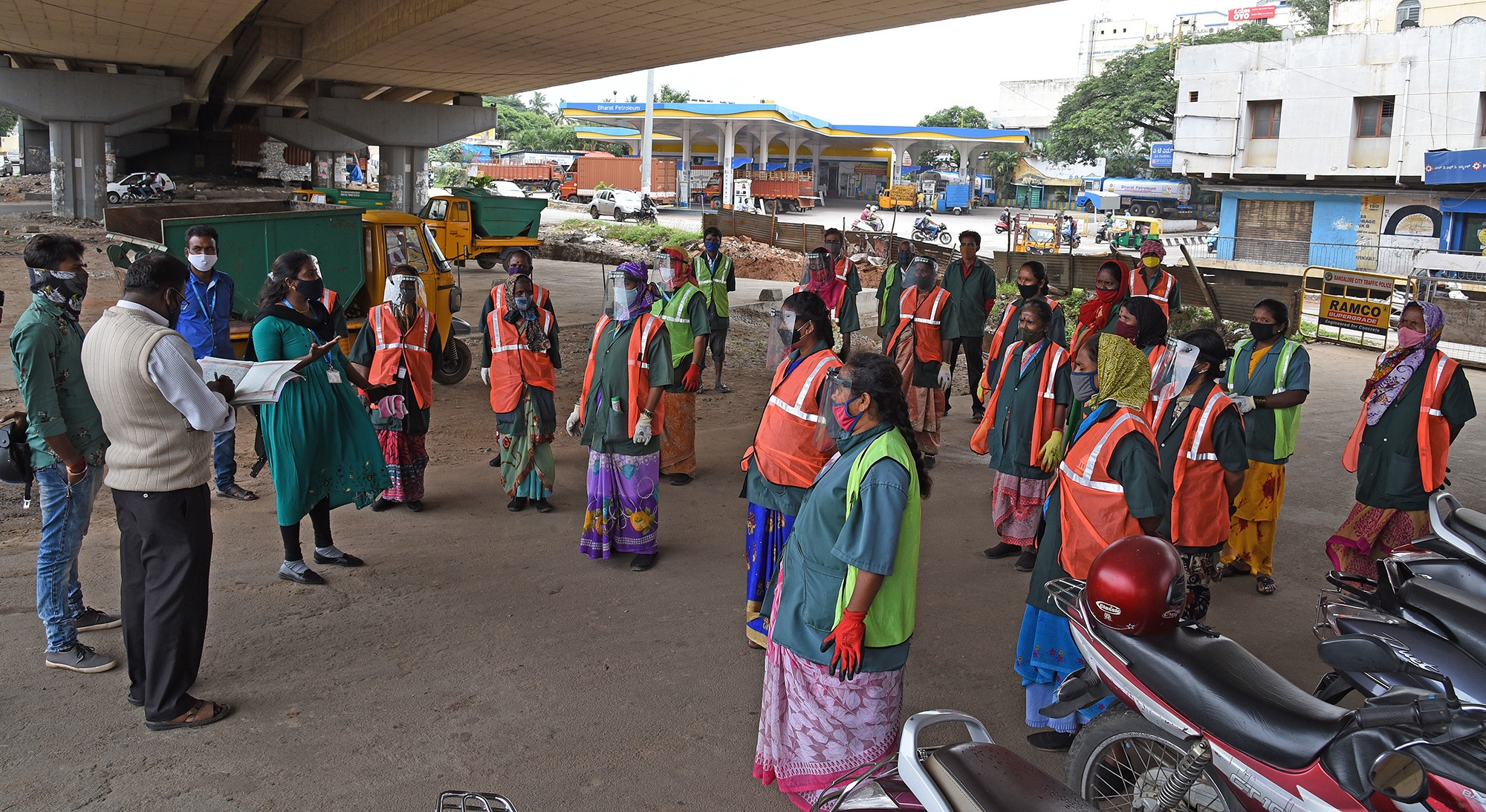
WORKERS’ TRAIL: Make us regular employees: Sanitation workers
By Maqsood Maniyar | NT
Bengaluru: Pourakarmikas or street sweepers said that the demand to make them permanent employees was on the top of their list.
They called upon Bruhat Bengaluru Mahanagara Palike (BBMP) to abolish the contract system to enable better pay for the sanitation workers.
BBMP Pourakarmika Sangha president Nirmala said that regularisation would go a long way in making them financially secure. “They should be made permanent (employees). You know about the kind of salaries coming in right now in context with inflation. They are under a lot of stress. They have been working for so many years. After years of struggles and protests, around 2017-18, they got their salaries hiked to somewhere around Rs 14,000 per month. Earlier, it was only Rs 2,000 or Rs 3,000. Then it went up to Rs 8,000,” she said.
“Treat us with dignity. Call us by our names. Don’t say hey, sweeper, garbage collector, come here,” she added. Nirmala said their other demands include running water to wash their hands before eating, drinking water, toilets at workplaces and housing from the government.
Maitreyi, a lawyer, works with BBMP Pourakarmika Sangha, which is affiliated with All India Central Council of Trade Unions (AICCTU), said that regularisation was favourable, but the occupation itself was rooted in caste oppression. “It is by virtue of caste that people are doing this work. Everybody belongs to the Dalit community and almost all of them are women. It’s a very dehumanising occupation,” she said.
“They should be treated as permanent workers. They should be given wages on par with the permanent workers. While permanent workers get wages between Rs 45,000 and Rs 50,000, Purakarmikas get around Rs 14,500, minimum wages. This is blatant inequality. They have been working for 25 to 30 years. That is not a small time,” she said. Maitreyi also favoured housing being provided to Pourakarmikas and free quality education for their children so that they can break out of this cycle and take up other, better paying jobs.
‘Different forms of manual scavenging’
“New forms of manual scavenging include housekeeping in hospitals, railways and the like where they are asked to deal with human waste with their bare hands. There is no political will to change this. In fact, it is a conscious decision by the government to perpetuate this casteist and patriarchal oppression,” Maitreyi said.
Chandra, a Pourakarmika, said that he had worked as a manual scavenger some four years ago and added that he also favours abolition of the contract system. “For our movement to succeed, we (Pourakarmikas) have to be united. It would help if the government revised our salary to Rs25,000,” he said. Rangamma, who sweeps the streets near Magadi Road said: “Pay should be more. There has been a price rise, but wages have remained the same. It is not enough to meet expenses like petrol, cooking oil, rent etc."




.jpg)
