.jpg)


.jpg)

 English daily published in Bengaluru & Doha

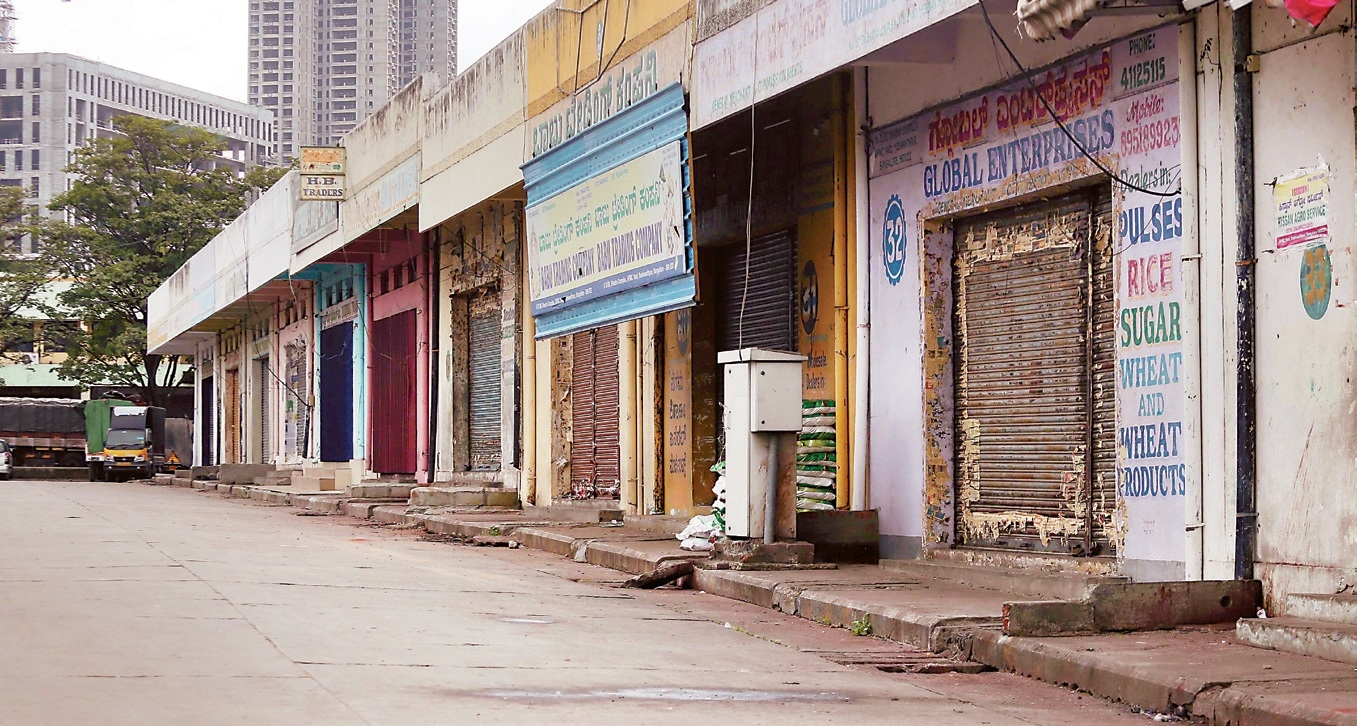
Traders’ bandh against GST on rice, foodgrains
NT Correspondent
Bengaluru
The bustling APMC yard at Yeshwanthpur wore a deserted look on Friday as APMC, commission agents, traders, and labour unions observed a state-wide bandh against proposed changes in goods and services tax (GST) levies. The protest comes after the Union government’s decision to levy 5 per cent GST on all packaged and labelled food products.
The State Rice Mill Owners’ Association has also stopped all activities in Karnataka and demanded the GST Council to take back its decision to impose GST on food grains. The association opines that the GST applied on food grains will increase the prices of rice, jowar, and ragi, which will impact the worki n g - class population.
Ramesh Chandra Lahoti, vice-president of the Federation of Karnataka Chambers of Commerce and Industry, alleges that the government has increased the GST without properly understanding the market. “The government has decided to levy 5 per cent GST on packaged and labelled food items. Most of what we sell in our shop is unbranded, so it’s cheap. Now the prices of even these products will increase, and this decision will directly impact the consumers,” he said.
Many retai ler s also fear that a GST hike will make them uncompetitive. “We used to buy stuff in bulk and make packets in our retail store, and now what has happened is that GST will also be applicable on these unbranded packed goods. And most of the buyers prefer to buy unbranded goods. But when the prices of the products increase, we will start losing customers. This will eventually lead to big brands capturing the market,” says Ram, a Kirana store owner in Yeshwanthpur.
Some retailers complain that there will be a hindrance in following the rules as they are not very familiar with the GST system. Hence, they might have to pass the tax on to the customers. “The burden will eventually fall on the customers, who will have to pay more,” adds Ram.
The GST on non-branded edibles is likely to hit the kitchen budgets. Karishma, a housewife, said, “The prices of essential commodities were already high; now it will increase more. It is difficult to make money, especially after the pandemic. Now the government is increasing the prices of LPG cylinders and food grains. How are we supposed to survive?”




.jpg)
