.jpg)


.jpg)

 English daily published in Bengaluru & Doha

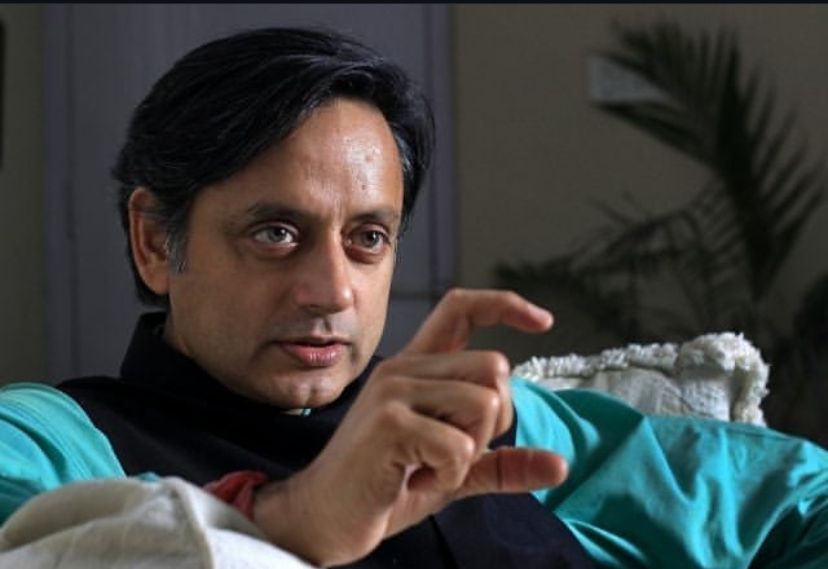
Congress cringes as Tharoor slams Emergency as 'dark chapter'
Thiruvananthapuram: Senior Congress leader Shashi Tharoor has criti cised the Emergency declared by Prime Minis ter Indira Gandhi in 1975, saying the people of the country responded clearly to the excesses of that period by voting her party out of power by a large margin.
In an article published on the measure, which lasted between 25 June 1975 and 21 March 1977, in the Malayalam daily 'Deepika' on Thursday, the Congress Working Committee member termed it "a dark chapter" in India's history and recalled Indira Gandhi's son Sanjay Gandhi's notorious acts, in cluding forced sterilisation cam paigns and the merciless demolition of slums in New Delhi.
Prime Minister Indira Gandhi was seen as having endorsed harsh actions, Tharoor said, criti cising the country's first woman prime minister – whom the Nehru family and the Congress regard as the Iron Lady of India – on the matter. When asked for his views on the article, Leader of Opposition and senior Congress leader V D Satheesan said only the national leadership of the party can com ment on this.
Further commenting on the measures taken under Emergency, Tharoor said that efforts un dertaken for discipline and order often turned into acts of cruelty that could not be justified. "Sanjay Gandhi, the son of Indira Gandhi, led forced sterilisa tion campaigns, which became a notorious example of this. In poor rural areas, violence and coercion were used to meet arbitrary targets.
In cities like New Delhi, slums were mercilessly demolished and cleared. Thousands of people were rendered homeless. Their welfare was not taken into consid eration," the Thiruvananthapuram MP wrote. Tharoor lamented that these actions were later por trayed with some dignity, despite being unfortunate excesses.
"Some may argue that the Emergency brought about a scar on Indian politics. Although the judiciary later tried to restore balance, the initial setback could not be forgotten, Tharoor said. "The excesses of that period caused deep and lasting damage to countless individuals. Among the affected communities, it left behind fear and mistrust.
Follow temporary order and offered brief relief from the disorder of democratic politics. However, these violations were the result of unchecked power turning into authoritarianism. Whatever order may have emerged during the Emergency, it came at the cost of the soul of our Republic," the Con gress leader said.
He said the silencing of dissent, the curtailment of fundamental rights such as the freedom to as semble, write, and speak freely, and the blatant disregard for con stitutional laws left an enduring ing the Emergency, in the first free election held in March 1977, the people responded clearly – voting Indira Gandhi and her party out of power by a large margin," the Congress MP said. He said "democracy is not something to be taken lightly"; it is a "precious legacy that must be constantly nurtured and pre served."
"Let it serve as a lasting reminder to people everywhere," Tharoor said. According to him, to day's India is not the India of 1975. "We are a more self-confident, developed, and in many ways a stronger democracy. Yet, lessons of the Emergency remain relevant in troubling ways," he said. Tharoor warned that the "temp tation to centralise power", silence dissent, and "bypass con stitutional safeguards" may reappear in vari ous forms. (PTI)


